
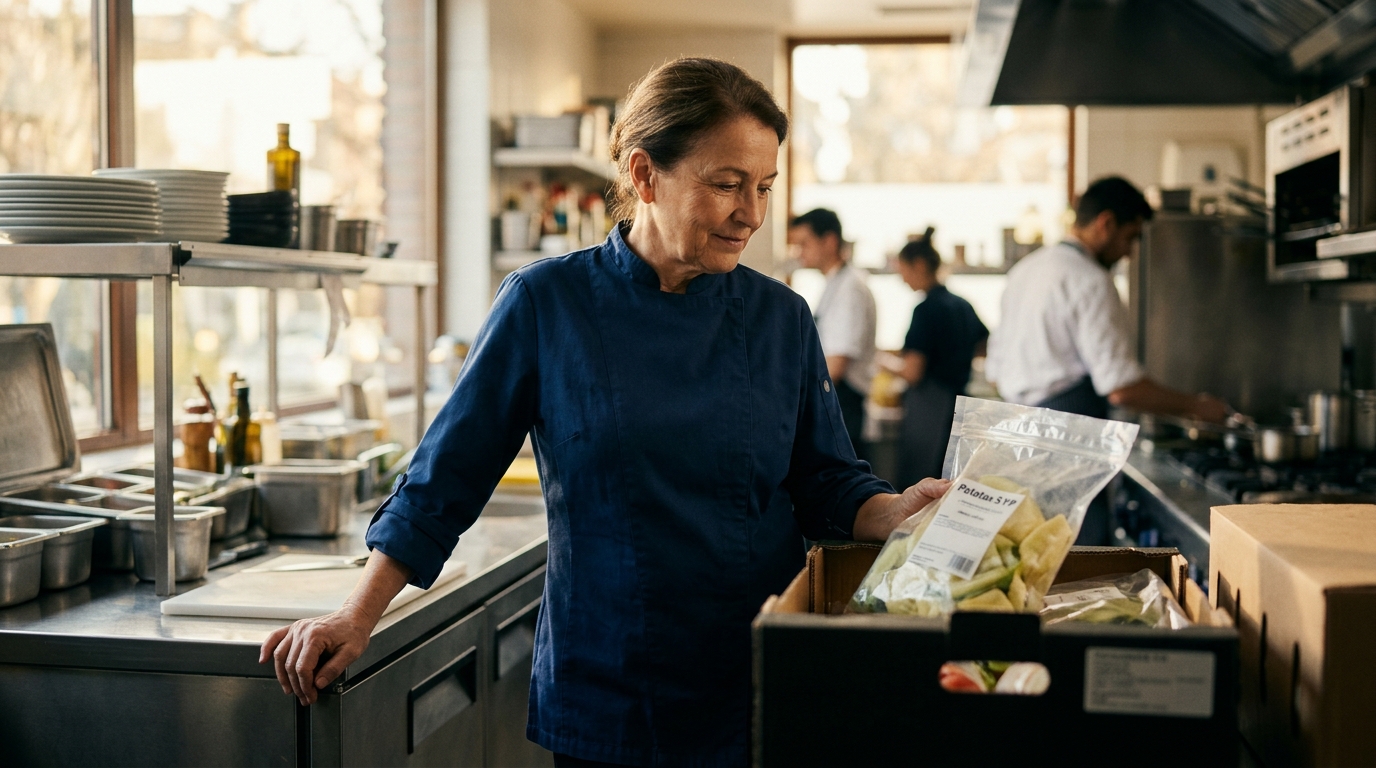
Food service operations face relentless pressure to reduce labor costs while maintaining high standards of quality. Preparation time is often the biggest bottleneck in professional kitchens, particularly for labor-intensive items like root vegetables. Industry data indicates that professional kitchens can spend up to 30% of their prep time on basic vegetable processing tasks. By shifting from manual peeling to industrial distribution, restaurants can reclaim hundreds of hours annually. This guide explains exactly how to implement this shift effectively.
Why Manual Prep Fails in Modern Kitchens
The traditional model of kitchen operations relies heavily on skilled labor for basic tasks. However, the current labor market makes this approach increasingly unsustainable. Chefs and kitchen managers are finding that hiring staff solely for peeling and cutting is financially inefficient. The opportunity cost of having a highly paid chef perform low-skill tasks is significant.
Manual peeling also introduces variability. Human error leads to inconsistent cuts, which affects cooking times and final presentation. Inconsistency is the enemy of speed. When every fry or mash piece varies in size, the kitchen loses control over timing. This leads to bottlenecks during peak service hours. Outsourcing these tasks to a specialized provider eliminates these variables entirely.
Furthermore, hygiene risks increase with manual processing. Every time a knife touches a potato, there is a risk of cross-contamination if protocols are not strictly followed. Professional distributors use controlled environments to mitigate these risks. According to food safety guidelines, centralized processing reduces the likelihood of bacterial growth compared to open kitchen prep stations.
Understanding IV Gama Solutions
IV Gama refers to minimally processed fruits and vegetables that are fresh, ready to eat, or ready to cook. This category includes washed, peeled, and cut produce that maintains its nutritional value and freshness. For restaurants, IV Gama products are the ultimate time-saving tool. They bridge the gap between raw ingredients and the final dish.
Patatas Peladas specializes in this exact sector. They provide fresh, ready-to-cook potatoes and vegetables delivered daily. This model ensures that the kitchen receives ingredients that are already processed to specification. The term IV Gama is defined as a category of minimally processed fresh produce that retains its natural characteristics while offering convenience.
By adopting IV Gama products, restaurants can reduce waste. Manual peeling often results in significant loss of edible material. Industrial peeling techniques are more precise, yielding more usable product per kilogram. This efficiency translates directly to lower food costs. Additionally, the consistency of industrial cuts ensures uniform cooking, which reduces the risk of overcooking or undercooking.
Strategic Cutting Options for Efficiency
Different dishes require different cuts. A one-size-fits-all approach does not work in professional cooking. Specialized distributors offer a wide range of cuts to match specific menu needs. This variety allows kitchens to streamline their operations by having exactly what they need, when they need it.
Common cuts include French fries, steakhouse cuts, and brava style. Each cut serves a specific culinary purpose. French fries require uniform thickness for even crisping. Steakhouse cuts need to be thick enough to retain moisture. Brava style potatoes are often rustic, requiring careful peeling to maintain texture.
Vegetables are not the only option. Onions, garlic, and leafy greens are also available in pre-cut formats. This expands the time-saving potential beyond just potatoes. A kitchen can outsource the entire vegetable prep list. This holistic approach maximizes labor efficiency. The definition of a cut is the specific shape and size to which a vegetable is processed for culinary use.
Quality Control and Safety Standards
Trust is the foundation of any supplier relationship. Restaurants need to know that the products they receive are safe and high-quality. This is where rigorous quality control protocols come into play. Professional distributors undergo strict sanitary certifications to ensure compliance.
Independent laboratories conduct monthly analyses of products and handling processes. These tests verify that the food meets all sanitary standards. Safety is non-negotiable in food service. Any lapse in hygiene can result in severe consequences for a restaurant. Therefore, choosing a supplier with a proven track record is essential.
Patatas Peladas maintains a proprietary peeling and cutting plant. This facility is designed to maintain optimal hygiene conditions. The process involves careful handling, storage, and transportation to guarantee longevity. The definition of sanitary certification is an official recognition that a facility meets government-mandated health and safety standards.
Transparency is key. Suppliers should provide documentation of their quality control measures. This includes certificates of analysis and hygiene reports. Restaurants should verify these documents regularly. This due diligence protects the brand reputation of the restaurant. It also ensures that the food served is safe for consumption.
Cost Analysis: DIY vs. Outsourcing
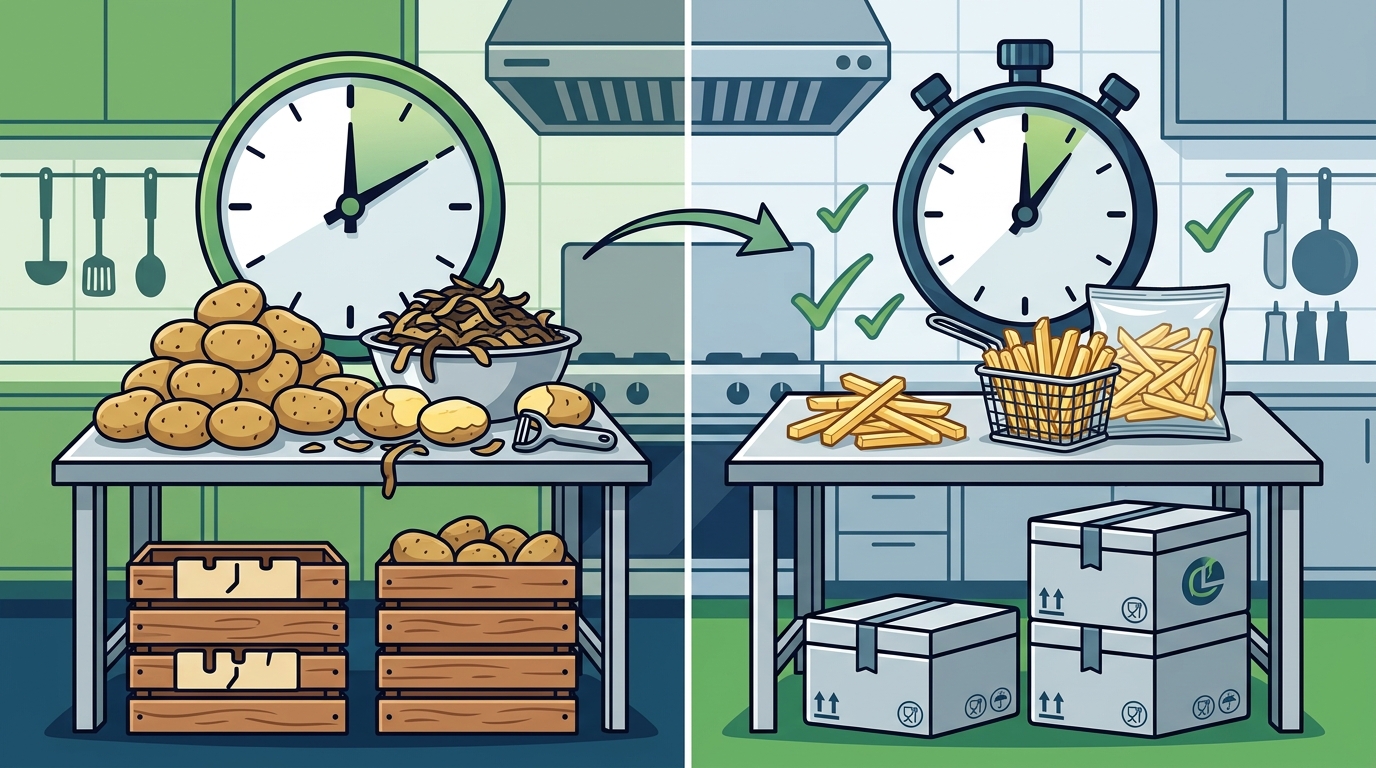
Many restaurant owners hesitate to outsource prep work due to perceived costs. However, a detailed analysis often reveals that outsourcing is more economical. The true cost of manual prep includes labor, waste, and equipment maintenance.
Labor costs are the most significant factor. Wages, benefits, and training all add up. When you add the time spent on peeling and cutting, the cost per kilogram of processed potato rises sharply. Outsourcing converts these fixed costs into variable costs. You only pay for what you use.
Waste reduction is another critical component. Manual peeling can result in 10-15% waste. Industrial peeling is more efficient, reducing waste to less than 5%. This difference adds up over time. Additionally, the consistency of industrial cuts reduces cooking errors, further lowering waste.
| Factor | Manual Prep | Outsourced IV Gama |
|---|---|---|
| Labor Cost | High | Low |
| Waste Percentage | 10-15% | <5% |
| Consistency | Variable | Uniform |
| Hygiene Risk | Higher | Controlled |
| Time Savings | None | Significant |
Key Takeaways
- Manual peeling consumes up to 30% of kitchen prep time, creating significant bottlenecks.
- IV Gama products offer fresh, ready-to-cook vegetables that maintain nutritional value.
- Specialized cuts like French fries and steakhouse options ensure uniform cooking.
- Independent laboratory testing ensures monthly sanitary certification of products.
- Outsourcing reduces waste from 15% to under 5% through industrial precision.
- Patatas Peladas has over 20 years of experience in the distribution sector.
- Free samples are available to test product quality before committing.
Frequently Asked Questions
What is IV Gama produce?
IV Gama is a classification for minimally processed fresh fruits and vegetables that are washed, peeled, and cut, ready for immediate use in cooking.
How does outsourcing potato prep save money?
It reduces labor costs by eliminating the need for staff to perform manual peeling and cutting, while also reducing waste through industrial precision.
Are pre-cut potatoes safe to eat?
Yes, when sourced from certified distributors who follow strict sanitary protocols and undergo regular independent laboratory testing.
What types of cuts are available?
Common cuts include French fries, steakhouse cuts, brava style, and rustic cuts with skin, as well as diced onions and peeled garlic.
How often are deliveries made?
Products are typically delivered fresh daily to ensure maximum quality and longevity for the restaurant.
Can I request specific custom cuts?
Many distributors offer custom cutting services to meet the specific needs of your menu and kitchen equipment.
What is the shelf life of IV Gama potatoes?
IV Gama potatoes have a shorter shelf life than raw potatoes but are designed to be used within a few days of delivery for optimal freshness.
Contact Us
Ready to transform your kitchen operations? Stop wasting time on manual prep. Contact Patatas Peladas today to discuss your needs. Visit our contact page to schedule a consultation. You can also request a free sample from our catalog. Explore our services to learn more about our distribution capabilities. Join the network of restaurants that have optimized their prep work. Visit our homepage to get started.