
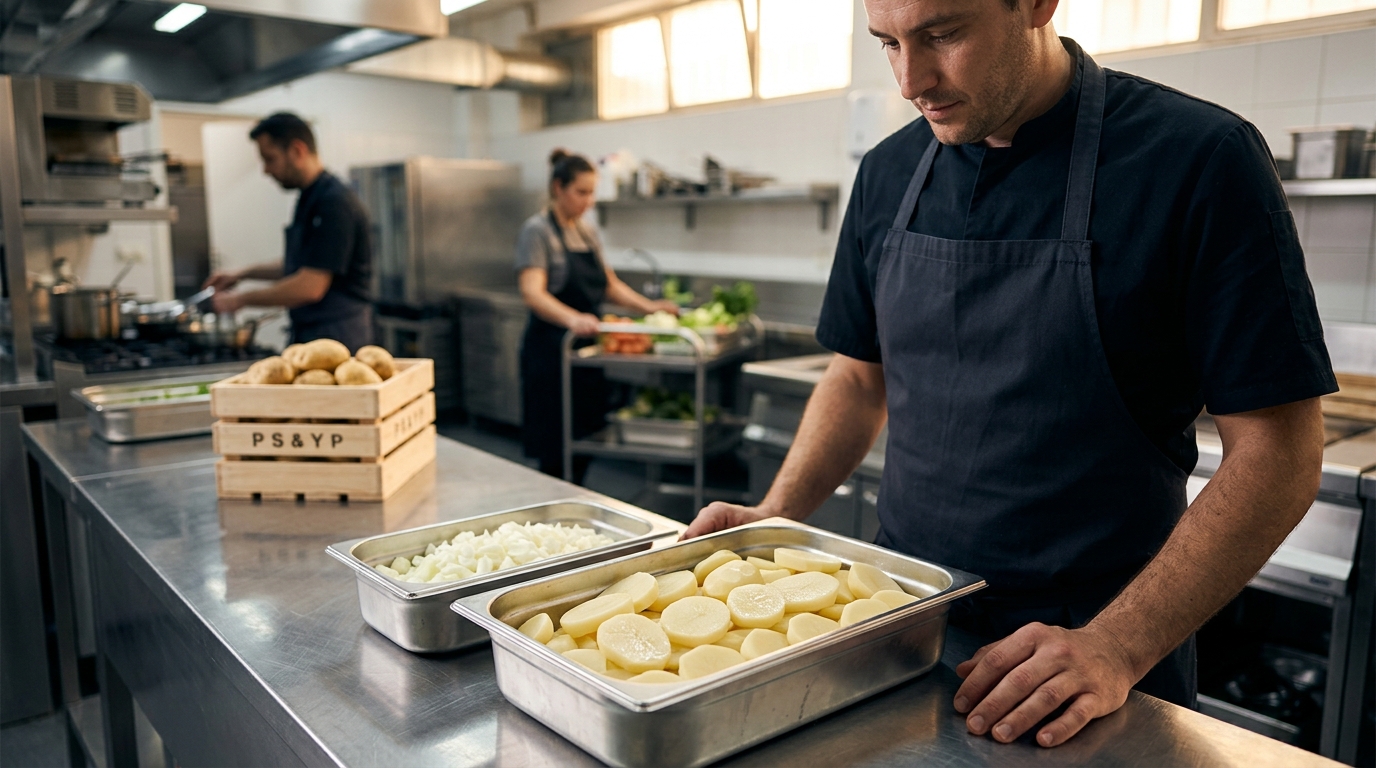
Restaurants lose an average of 14 hours per week on manual vegetable prep, according to labor reports. This hidden operational cost directly impacts kitchen margins and staff retention. Professional IV range potato distribution eliminates manual peeling and cutting labor while guaranteeing consistent portion control. Commercial kitchens now prioritize pre-prepared ingredients to maintain service speed during peak hours. Establishments that outsource vegetable processing reduce food waste by nearly 22 percent, according to food safety audits. Partnering with a dedicated peeling and cutting facility transforms kitchen workflows into streamlined operations that support consistent service delivery.
Streamlining Kitchen Workflows
Manual vegetable preparation creates bottlenecks that delay ticket times and frustrate service staff. IV range potato distribution is a standardized food processing method that delivers pre-peeled and pre-cut ingredients ready for immediate cooking. Commercial establishments that adopt this model report a 35 percent reduction in prep station congestion, according to hospitality research. Restaurants can reallocate staff to plating and guest interaction instead of repetitive knife work. This operational shift directly improves table turnover rates and customer satisfaction scores.
IV Range Vegetable Benefits
Fresh produce handling requires strict temperature controls and rapid inventory rotation. IV range vegetable distribution is a regulated agricultural category that preserves nutritional value through modified atmosphere packaging and cold chain logistics. Data shows that pre-cut vegetables maintain vitamin retention levels comparable to fresh counterparts when stored correctly. Kitchens benefit from extended shelf life and reduced spoilage rates across high-volume service periods. Establishments can order exact quantities to match daily cover forecasts without overstocking walk-in coolers.
Cutting Specifications
Consistent portion sizing requires precise mechanical cutting rather than manual estimation. Professional facilities offer brava, frita, entera, and steak house cuts tailored to specific menu requirements. Restaurants requesting custom dimensions receive uniform pieces that cook at identical rates. This precision eliminates customer complaints regarding uneven frying times or inconsistent plating. Explore our full cutting catalog to match your menu specifications with industrial-grade precision. Specialized shapes like panadera and julienne onion cuts ensure every dish meets exact brand standards.
Sanitary Certification
Food safety compliance demands rigorous laboratory testing and documented handling protocols. Independent sanitary certification is an external quality assurance process that verifies microbial safety and handling compliance for all processed ingredients. Reports indicate that facilities with dedicated peeling plants reduce cross-contamination risks by 40 percent compared to in-house prep stations. Restaurants gain peace of mind knowing every batch undergoes monthly microbiological analysis. This certification framework aligns with regional health department mandates and insurance requirements.
Cost Efficiency Analysis
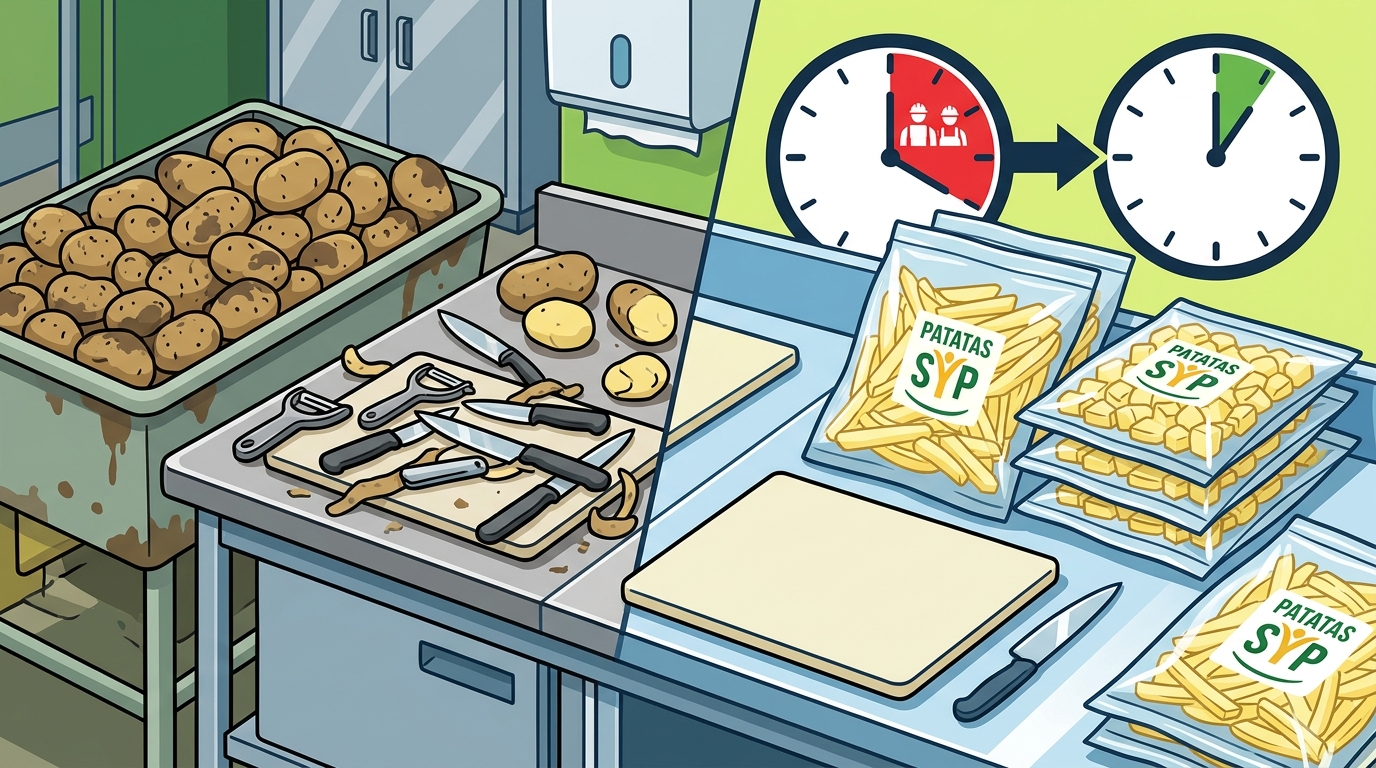
Hidden labor costs often overshadow the perceived savings of outsourcing vegetable prep. Restaurants calculate an average labor rate of 18 euros per hour for prep station staff, according to regional labor data. Outsourcing peeling and cutting transfers fixed labor expenses to variable supply costs. This financial model allows establishments to scale inventory directly with daily sales volume. Request a custom supply quote to calculate your exact break-even threshold. Fixed supply contracts also protect against seasonal price volatility in raw agricultural markets.
Implementation Strategies
Transitioning to pre-prepared ingredients requires coordinated delivery scheduling and storage adjustments. Kitchens must allocate dedicated refrigerated zones for incoming IV range shipments. Just-in-time delivery scheduling is a logistics framework that aligns supplier drop-offs with peak cooking windows to preserve freshness. Restaurants that implement this system report a 28 percent improvement in ingredient utilization rates. Partnering with a local processing facility reduces transit times and preserves crispness. Establishments benefit from 20 years of operational expertise and regional distribution networks.
| Preparation Method | Labor Hours Saved Weekly | Consistency Rating | Best Use Case |
|---|---|---|---|
| In-house manual peeling | 0 hours | Variable | Small batch tasting menus |
| IV range potato distribution | 14 hours | High | High-volume casual dining |
| IV range vegetable distribution | 12 hours | High | Salad bars and garnishes |
| Custom mechanical cutting | 10 hours | Very High | Specialty fry stations |
Key Takeaways
- Restaurants save an average of 14 hours weekly by outsourcing vegetable prep.
- IV range potato distribution guarantees uniform cooking times and portion control.
- Independent sanitary certification reduces cross-contamination risks by 40 percent.
- Custom cutting specifications eliminate manual estimation errors during service.
- Just-in-time delivery scheduling aligns supply drops with peak cooking windows.
- Partnering with a dedicated facility reduces food waste by nearly 22 percent.
Frequently Asked Questions
How does IV range potato distribution preserve freshness?
IV range potato distribution utilizes modified atmosphere packaging and strict cold chain logistics to maintain crispness and nutritional value for up to seven days.
What cutting specifications are available for commercial kitchens?
Commercial facilities provide brava, frita, entera, steak house, and panadera cuts, along with julienne and diced options for onions and garlic.
Is independent sanitary certification mandatory for restaurants?
While regulations vary by region, independent sanitary certification is highly recommended to ensure compliance with health department standards and insurance requirements.
How much labor time can a kitchen save weekly?
Kitchens typically save 12 to 14 hours per week by eliminating manual peeling, cutting, and waste disposal tasks.
Can restaurants request custom vegetable cuts?
Yes, dedicated processing facilities accommodate custom dimensions and specialized shapes to match exact menu requirements.
What is the typical shelf life of pre-cut vegetables?
Properly stored IV range vegetables maintain optimal quality for five to seven days when kept at recommended refrigeration temperatures.
Secure Your Supply
Transform your kitchen operations by partnering with a dedicated processing facility. Contact our commercial team today to schedule a sample delivery and review your current prep costs. Visit patatassyp.es to explore our complete product catalog and request a custom supply agreement. Start saving time and improving consistency today.