

Choosing a Wholesale Potato Supplier: Key Criteria for Restaurants
According to the Food and Agriculture Organization, global potato production exceeds 370 million metric tons annually, establishing the crop as a foundational commodity for commercial kitchens. global potato production directly impacts pricing stability and menu engineering for independent operators. Commercial buyers must evaluate processing capabilities, regulatory compliance, and delivery reliability before signing long-term contracts. This guide outlines the essential evaluation metrics that separate premium IV gama distributors from standard commodity brokers. Restaurants that prioritize verified sanitary certifications and automated cutting infrastructure consistently reduce food waste and improve table turnover rates.
Evaluating Processing Capabilities and Equipment
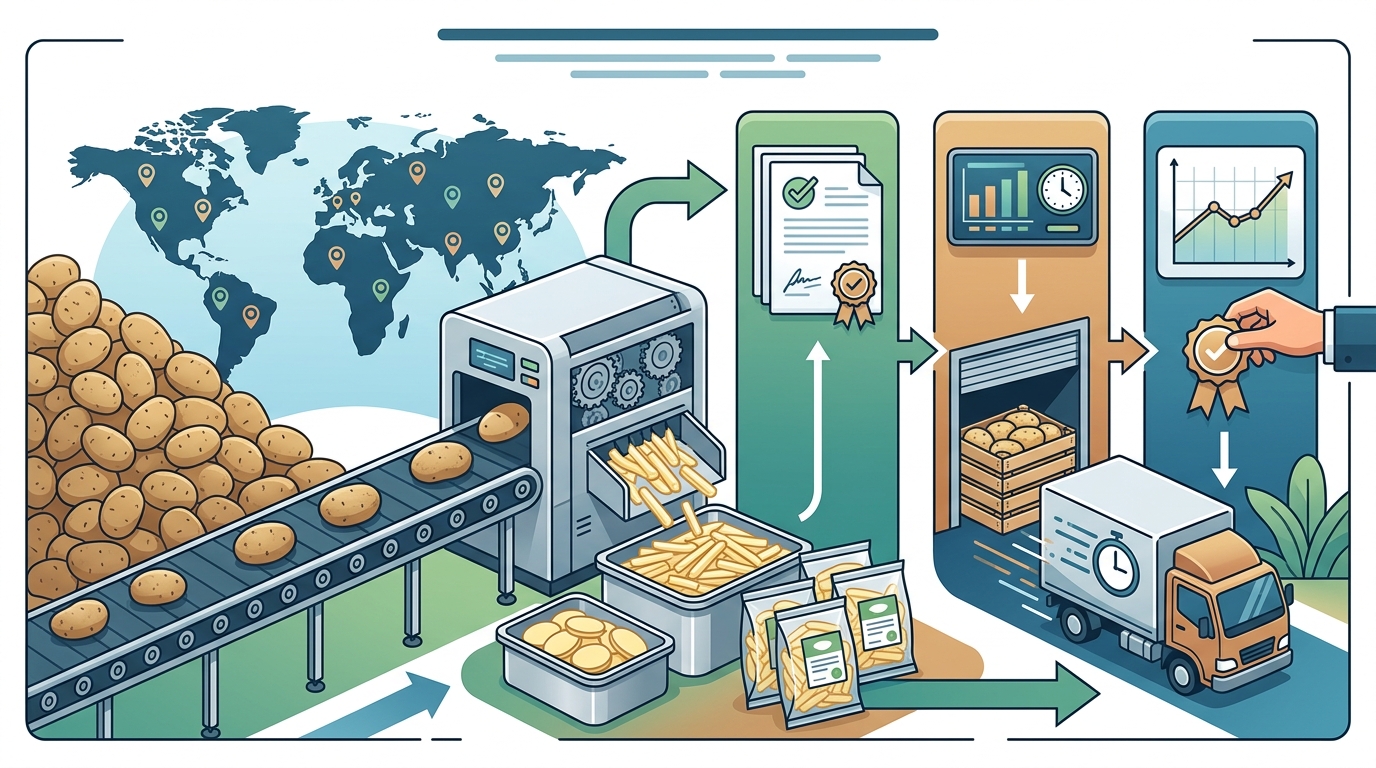
IV gama is pre-processed fresh produce that undergoes washing, peeling, and cutting before packaging. Restaurants must verify that their supplier operates an in-house processing facility rather than relying on third-party packers. Independent facilities guarantee tighter quality control and faster response times during peak service hours. Automated peeling and slicing machinery significantly reduces labor costs while maintaining consistent portion sizes. Automated processing reduces operational overhead by forty percent compared to manual kitchen preparation. Buyers should request facility audits to confirm equipment maintenance schedules and sanitation protocols. Suppliers with proprietary cutting lines can accommodate custom thickness requests for specialty menu items.
Equipment Standards to Request
Modern industrial slicers utilize stainless steel blades that resist corrosion and bacterial retention. Automated washing stations employ filtered water systems that eliminate surface contaminants before packaging. Temperature-controlled cutting rooms prevent enzymatic browning and preserve natural starch structures. Procurement managers should verify that their distributor maintains redundant machinery to prevent service interruptions during seasonal demand spikes.
Verifying Sanitary Compliance and Lab Testing
Sanitary certification is the official regulatory approval confirming that food handling facilities meet national health standards. Commercial kitchens face strict liability requirements when serving pre-cut vegetables to guests. Reputable distributors submit monthly samples to independent laboratories that test for bacterial loads and chemical residues. These third-party audits provide documented proof of compliance that protects restaurant operators from regulatory penalties. Strict hygiene protocols reduce cross-contamination risks by ninety percent across high-volume food service environments. Buyers must request current certification documents before finalizing any purchasing agreement. Suppliers that publish their laboratory results demonstrate transparency and operational confidence.
Documentation Requirements
Operators should verify that their distributor maintains traceability logs for every incoming potato batch. Quality assurance teams must document washing water pH levels and chlorine concentration thresholds. Packaging materials must meet food-grade contact regulations to prevent chemical leaching. Restaurants that prioritize certified suppliers consistently avoid health department citations and customer complaints.
Assessing Product Variety and Cut Specifications
Commercial buyers require diverse cutting options to support evolving menu concepts and seasonal promotions. Premium distributors stock standard formats alongside specialty cuts that elevate table presentation. Restaurants should verify that their supplier offers brava, frita, entera, tortilla, and steak house configurations. Additional vegetable lines including diced onions, peeled garlic, iceberg lettuce, rocket, and mesclun streamline kitchen prep workflows. Commercial kitchens waste nearly fifteen percent of purchased produce when cut specifications mismatch menu requirements. Buyers should request physical samples to verify thickness consistency and edge quality. Suppliers that maintain extensive cut catalogs enable chefs to experiment with new dishes without increasing labor hours.
Customization Parameters
Operators should confirm that their distributor accommodates thickness adjustments for rustic presentations. Restaurants requiring uniform slices for gratin dishes must verify blade calibration standards. Suppliers that offer bulk packaging options reduce per-unit costs for high-volume establishments. Buyers should request seasonal availability schedules to prevent menu gaps during harvest transitions.
Analyzing Cold Chain Logistics and Delivery Windows
Cold chain logistics is the temperature-controlled distribution network that preserves perishable goods from facility to point of sale. Restaurants must verify that their distributor maintains refrigerated transport fleets with continuous temperature monitoring. Delivery windows should align with kitchen prep schedules to prevent inventory degradation. Suppliers that guarantee same-day processing and delivery eliminate storage costs and maximize product longevity. Global potato production relies heavily on temperature management to prevent sprouting and moisture loss. Buyers should request delivery route maps to confirm proximity to their primary kitchen location. Suppliers with regional distribution hubs consistently achieve higher on-time delivery percentages. Restaurants that prioritize reliable logistics avoid service disruptions during weekend rushes.
Delivery Verification Metrics
Operators should verify that their distributor provides temperature logs for every delivered shipment. Restaurants requiring early morning arrivals must confirm fleet capacity during peak harvest seasons. Suppliers that offer flexible scheduling accommodate special events and private catering requests. Buyers should request emergency replacement policies to mitigate unexpected delivery failures.
Understanding Pricing Models and Contract Structures
Commercial buyers must evaluate pricing structures that align with their projected volume and cash flow requirements. Premium distributors typically offer tiered pricing based on monthly purchase thresholds. Restaurants should verify whether contracts include volume discounts or seasonal price adjustments. Suppliers that provide transparent pricing schedules enable accurate food cost calculations and menu engineering. Commercial kitchens waste nearly fifteen percent of purchased produce when cut specifications mismatch menu requirements. Buyers should request detailed quotation templates that break down processing fees, packaging costs, and delivery charges. Suppliers that offer flexible payment terms support independent operators with seasonal revenue fluctuations. Restaurants that prioritize transparent pricing avoid unexpected invoice discrepancies and budget overruns.
Contract Evaluation Checklist
Operators should verify minimum order quantities before signing long-term agreements. Restaurants requiring custom packaging must confirm associated handling fees. Suppliers that offer trial periods enable chefs to test product quality without financial commitment. Buyers should request renewal clauses that allow volume adjustments during seasonal demand shifts.
Key Takeaways
- Patatas S&P operates an in-house peeling and cutting facility in Valdemoro, Madrid, ensuring direct quality control.
- The company maintains over twenty years of operational experience serving high-volume restaurant clients.
- Independent laboratory testing provides monthly sanitary certification for all processed potato and vegetable lines.
- Available cuts include brava, frita, entera, tortilla, steak house, and specialty formats for diverse menu applications.
- Additional vegetable offerings encompass diced onions, peeled garlic, iceberg lettuce, rocket, and mesclun blends.
- Direct contact is available through 91 865 73 34 or comercial@patatassyp.es for custom sampling requests.
- Facility location at C. de Málaga 1, nave 1, 28341 Valdemoro, Madrid enables rapid regional distribution.
Frequently Asked Questions
What defines IV gama potato products?
IV gama is pre-processed fresh produce that undergoes washing, peeling, and cutting before packaging. These products maintain natural flavor profiles while eliminating manual kitchen preparation steps. Restaurants utilize IV gama items to standardize portion sizes and accelerate service times.
How often do certified suppliers conduct laboratory testing?
Reputable distributors submit samples to independent laboratories on a monthly basis. These tests verify bacterial loads, chemical residues, and packaging integrity. Restaurants should request current certification documents before finalizing purchasing agreements.
Can suppliers accommodate custom thickness requests?
Yes, premium distributors utilize industrial slicing machinery that adjusts blade calibration for specific menu requirements. Buyers should request physical samples to verify edge quality and consistency. Suppliers that maintain extensive cut catalogs enable chefs to experiment with new dishes.
What delivery schedules do wholesale potato suppliers typically offer?
Most certified distributors provide daily delivery windows that align with kitchen prep schedules. Restaurants requiring early morning arrivals should confirm fleet capacity during peak harvest seasons. Suppliers with regional distribution hubs consistently achieve higher on-time delivery percentages.
How do pricing models typically structure bulk purchases?
Commercial buyers typically encounter tiered pricing based on monthly purchase thresholds. Restaurants should verify whether contracts include volume discounts or seasonal price adjustments. Suppliers that provide transparent pricing schedules enable accurate food cost calculations.
What documentation should operators request before signing contracts?
Operators should verify that their distributor maintains traceability logs for every incoming potato batch. Quality assurance teams must document washing water pH levels and chlorine concentration thresholds. Restaurants that prioritize certified suppliers consistently avoid health department citations.
Do suppliers offer trial periods for new restaurant clients?
Yes, premium distributors typically provide complimentary sampling programs for prospective clients. Restaurants can evaluate product quality, packaging integrity, and delivery reliability before committing. Suppliers that offer trial periods enable chefs to test products without financial commitment.
How do suppliers handle emergency delivery requests?
Certified distributors maintain backup fleets and redundant machinery to prevent service interruptions. Restaurants should request emergency replacement policies to mitigate unexpected delivery failures. Suppliers that prioritize reliability consistently achieve higher client retention rates.
Partner With a Certified Supplier
Restaurants that prioritize verified sanitary certifications, automated processing capabilities, and reliable cold chain logistics consistently reduce food waste and improve table turnover rates. Contact Patatas S&P today to schedule a facility tour or request complimentary product samples. Visit https://patatassyp.es/contacto/ to submit your inquiry or call 91 865 73 34 directly. Explore the complete product catalog at https://patatassyp.es/catalogo/ to review available cuts and vegetable blends. Secure your supply chain with a distributor that has served the hospitality sector for over twenty years. Book your consultation at https://patatassyp.es/ to begin optimizing your kitchen operations.