
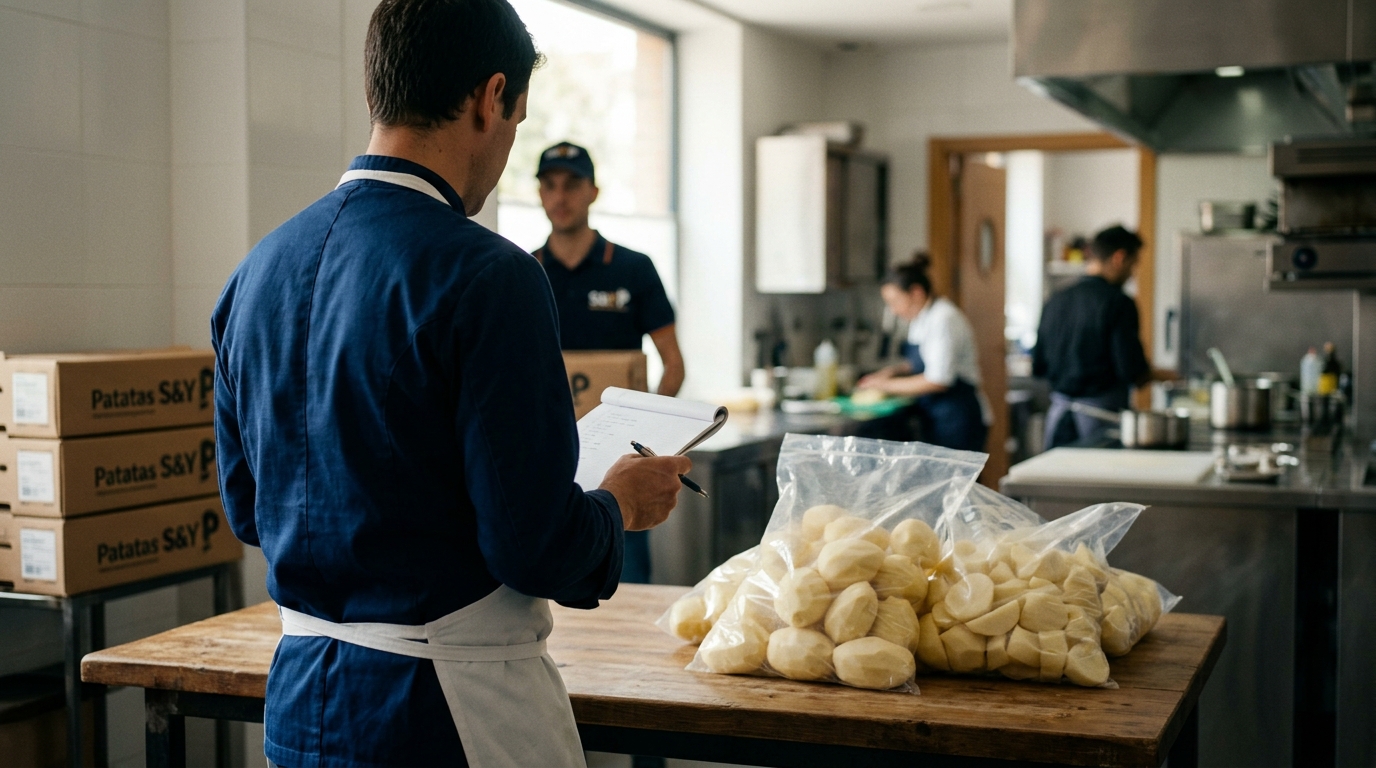
Restaurants face rising food costs every quarter. According to industry data, commercial kitchens spend nearly thirty percent of their total operating budget on fresh produce procurement. Managing these expenses requires a strategic shift toward IV gama products. IV gama is a food industry classification that refers to washed, cut, and packaged fresh vegetables ready for immediate culinary use. Distributors like Patatas S&P streamline this process by operating dedicated peeling and cutting facilities. This operational model reduces kitchen labor hours while maintaining strict sanitary compliance. Understanding how to evaluate wholesale pricing ensures your establishment maintains healthy margins without sacrificing quality.
Evaluating Cut Specifications
Standardized Dimensions
Wholesale pricing fluctuates heavily based on the geometric precision of each potato cut. Restaurants must request exact millimeter measurements before approving a supplier quote. Standardized dimensions like patata frita or brava require specialized machinery that increases baseline production costs. You should compare how different vendors price these specific shapes against raw tuber costs. Custom processing requests often trigger additional handling fees that inflate your final invoice.
Custom Processing
Some distributors offer bespoke cutting services tailored to specific menu requirements. These services typically carry premium pricing due to reduced production line efficiency. You must verify whether your target supplier operates a dedicated cutting hall or relies on third-party contractors. Patatas S&P operates a proprietary cutting facility that standardizes these processes across all product lines. You can review their complete product lineup by visiting their product catalog page.
Analyzing Distribution Models
Delivery Frequency
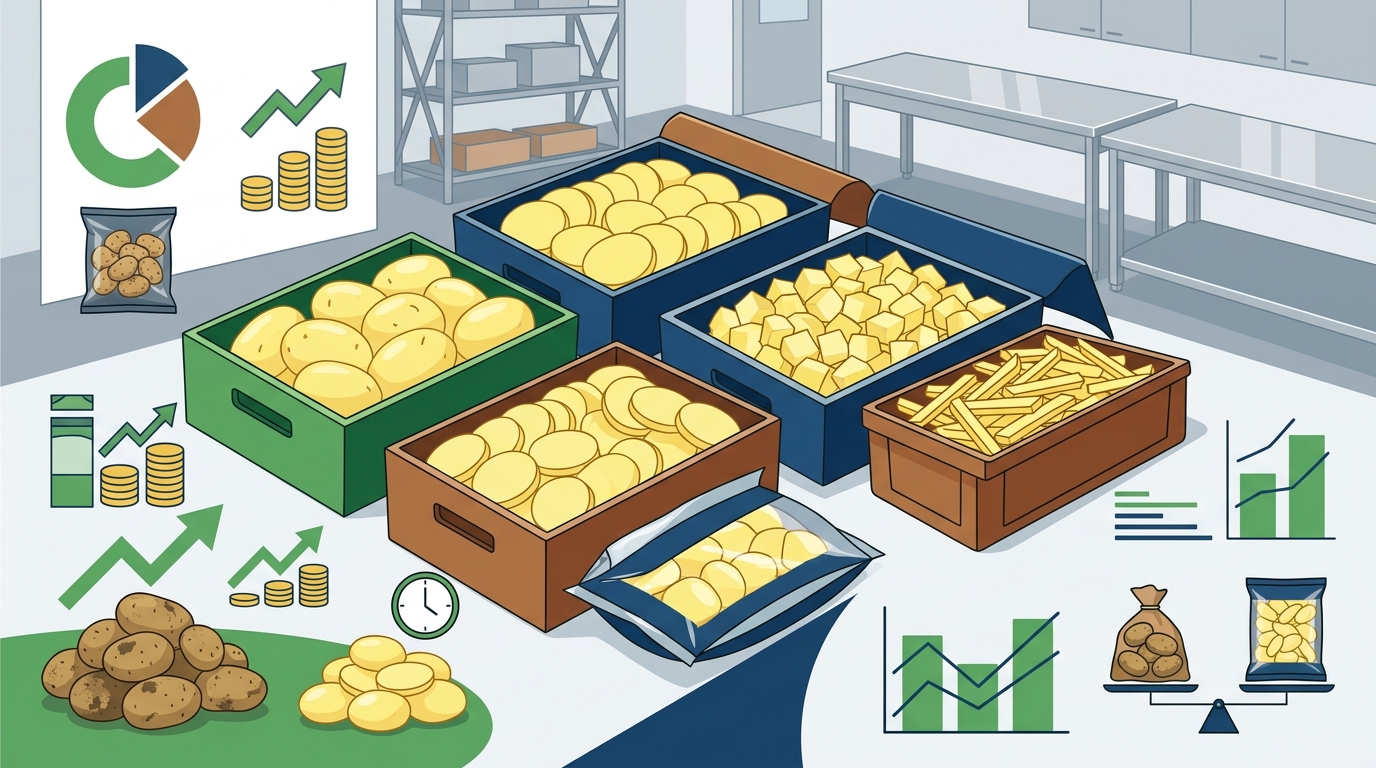
Logistics represent a hidden cost multiplier in wholesale agreements. Daily delivery routes require higher fuel expenditures and tighter inventory turnover. Weekly bulk shipments often reduce per-unit pricing but increase cold storage requirements. You should calculate your actual storage capacity before committing to a delivery schedule. Suppliers that optimize route density typically pass those savings directly to commercial clients.
Minimum Order Quantities
Most wholesale distributors enforce strict minimum order thresholds to maintain profitability. These thresholds vary significantly based on regional demand and seasonal harvest cycles. You must compare how each vendor calculates these baselines against your actual weekly consumption. Patatas S&P structures its distribution network to accommodate varying order volumes through their distribution services page. Smaller establishments should prioritize suppliers with flexible minimum thresholds to avoid inventory waste.
Comparing Safety Certifications
Sanitary Registration
Regulatory compliance directly impacts wholesale pricing structures. Facilities that maintain active sanitary registration must invest heavily in continuous auditing. These compliance costs are typically reflected in slightly higher unit prices. You should verify that your chosen distributor maintains current registration with regional food safety authorities. Patatas S&P maintains full registration with Spanish health oversight agencies. You can request their compliance documentation by contacting their commercial team through the contact page.
Independent Lab Testing
Third-party laboratory analysis provides an objective measure of product safety. Reputable distributors submit monthly samples to independent testing facilities. This rigorous testing protocol ensures consistent microbial safety across all batches. You should request recent laboratory reports before finalizing any long-term agreement. Facilities that skip independent testing often reduce prices by cutting corners on quality control.
Calculating Yield Efficiency
Yield efficiency is a culinary metric that measures the usable product weight after processing and trimming. Pre-peeled potatoes eliminate the labor cost of manual peeling and waste disposal. You must calculate the actual usable weight per kilogram against raw tuber pricing. Restaurants typically recover eighty-five percent of usable product from pre-peeled inventory. This efficiency directly translates to lower plate costs and improved profit margins.
Waste Reduction
Commercial kitchens generate substantial waste through peeling, trimming, and spoilage. Pre-peeled products eliminate these waste streams entirely. You should compare your current waste disposal costs against wholesale pricing. Facilities that switch to pre-pealed inventory often report a twenty percent reduction in overall food expenses. This reduction occurs because standardized portions eliminate over-portioning errors.
Portion Control
Standardized cuts guarantee consistent portion sizes across every service shift. Inconsistent portions directly erode profitability and damage customer satisfaction. You should audit your current portion weights against industry standards. Pre-pealed products remove human variability from the portioning process. This consistency allows you to price menu items with greater accuracy.
Reviewing Supplier Contracts
Pricing Tiers
Volume-based pricing tiers reward consistent purchasing behavior. You should request a detailed pricing schedule that outlines discounts at various order thresholds. These tiers typically activate after reaching specific monthly purchase volumes. You must compare how each vendor calculates these thresholds against your projected growth. Patatas S&P offers tiered pricing structures that scale with your business volume. You can review their standard terms by visiting their main website.
Renewal Terms
Contract renewal clauses often contain automatic price adjustment mechanisms. You should verify how frequently pricing updates occur throughout the agreement. Annual adjustments typically align with regional harvest fluctuations and logistics costs. You must negotiate fixed pricing windows to protect your operating margins. Suppliers that offer multi-year pricing locks provide greater financial predictability.
Liability Clauses
Product liability clauses determine financial responsibility during quality disputes. You should verify which party covers replacement costs for rejected shipments. Reputable distributors assume full liability for products that fail sanitary inspections. You must ensure your contract explicitly states these replacement protocols. Clear liability clauses prevent unexpected financial burdens during quality audits.
Comparison Summary
| Factor | Impact on Pricing | Recommended Action |
|---|---|---|
| Cut Precision | High | Request millimeter specifications before quoting |
| Delivery Frequency | Medium | Match route density to storage capacity |
| Sanitary Compliance | High | Verify independent lab testing schedules |
| Volume Thresholds | Medium | Calculate break-even points for discounts |
| Contract Duration | Low | Negotiate fixed pricing windows |
Key Takeaways
- IV gama products eliminate manual peeling labor and reduce kitchen waste by approximately twenty percent.
- Commercial kitchens allocate nearly thirty percent of total operating budgets to fresh produce procurement.
- Independent laboratory testing ensures consistent microbial safety across all wholesale batches.
- Standardized cut dimensions guarantee precise portion control and predictable plate costs.
- Volume-based pricing tiers activate after reaching specific monthly purchase thresholds.
- Proprietary cutting facilities maintain tighter quality control than third-party contractors.
- Clear liability clauses protect restaurants from unexpected replacement costs during quality audits.
Frequently Asked Questions
How do I calculate the true cost of pre-peeled potatoes?
You must combine the wholesale unit price with delivery fees, minimum order penalties, and waste disposal savings. This comprehensive calculation reveals the actual cost per usable kilogram.
Are pre-peeled potatoes safe for long-term storage?
IV gama products maintain optimal freshness when stored between zero and four degrees Celsius. Proper refrigeration extends shelf life while preserving texture and flavor profiles.
What minimum order quantity should I expect?
Most wholesale distributors require orders between fifty and two hundred kilograms per delivery. These thresholds vary based on regional demand and seasonal harvest cycles.
How often do suppliers update wholesale pricing?
Price adjustments typically occur monthly or quarterly to reflect harvest fluctuations and logistics costs. You should request a pricing schedule that outlines these update cycles.
Can I request custom cut specifications?
Many distributors offer bespoke cutting services tailored to specific menu requirements. These services typically carry premium pricing due to reduced production line efficiency.
What documentation do I need to verify supplier compliance?
You should request current sanitary registration certificates and recent independent laboratory reports. These documents confirm that the facility meets all regional food safety regulations.
How do I negotiate better wholesale rates?
You should commit to consistent weekly order volumes and request tiered pricing schedules. Consistent purchasing behavior typically unlocks significant volume discounts.
Next Steps
Comparing wholesale prices requires careful analysis of cut specifications, distribution models, and safety certifications. You should request samples from multiple suppliers before finalizing any long-term agreement. Patatas S&P offers complimentary product samples to help you evaluate quality firsthand. You can schedule a consultation or request your free sample by visiting their contact page today.