
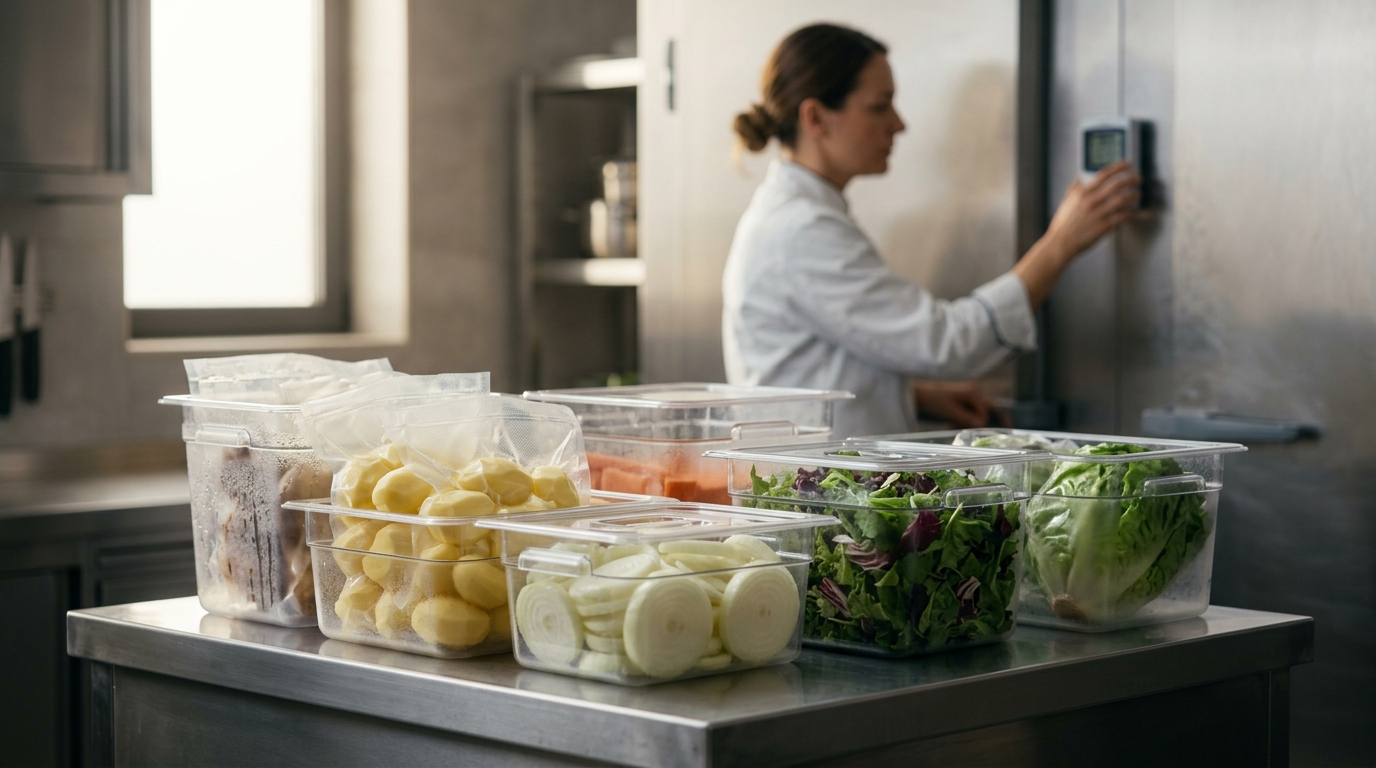
Commercial kitchens lose nearly thirty percent of their fresh-cut inventory when improper storage protocols are applied. According to industry data, maintaining strict temperature control and humidity management extends the usable lifespan of IV gama products by up to seventy-two hours. This operational reality demands precise handling from delivery to service. Restaurants that implement rigorous cold chain standards reduce waste and protect profit margins. Understanding the exact storage requirements for peeled potatoes, pre-cut onions, and mixed greens becomes a critical operational priority. The following guide outlines the exact procedures required to maximize product viability. (Contacto 8211 Patatas Peladas)
Temperature Control Standards
IV gama storage is a systematic approach to preserving fresh-cut produce through precise temperature, humidity, and packaging controls. Fresh-cut vegetables degrade rapidly when ambient temperatures exceed four degrees Celsius. Commercial refrigeration units must maintain a consistent range between zero and four degrees. This precise thermal window slows enzymatic activity and prevents bacterial proliferation. Restaurants should verify their cooling equipment daily using calibrated digital thermometers. Temperature fluctuation causes immediate quality loss. Your team must monitor delivery logs and reject any shipments that arrive outside the approved thermal range. Maintaining this baseline ensures your IV gama distribution partners deliver products that retain peak freshness upon arrival.
Humidity Management Protocols
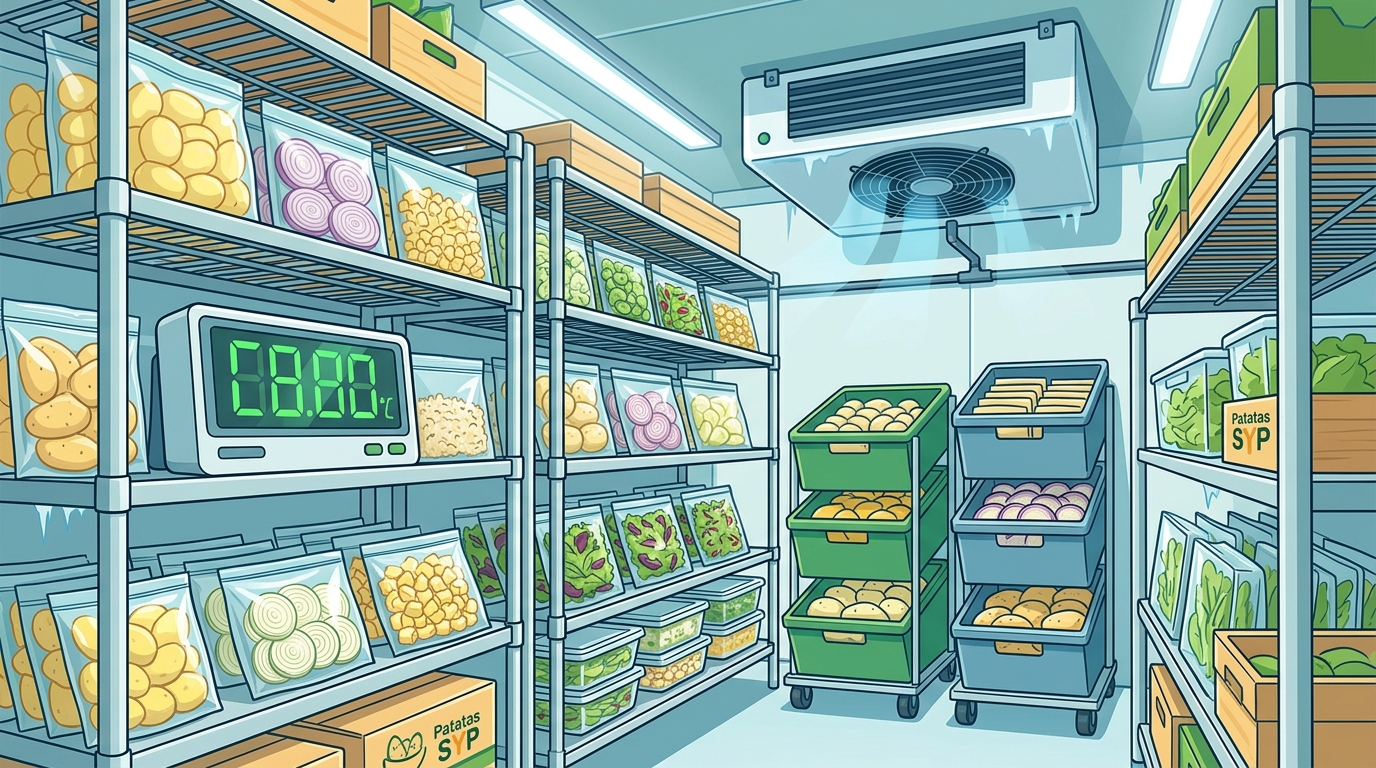
Moisture regulation directly impacts the structural integrity of peeled vegetables. IV gama storage environments require relative humidity levels between ninety and ninety-five percent. Low humidity triggers rapid desiccation, causing cut surfaces to brown and shrink. High humidity encourages microbial growth and accelerates spoilage. Commercial walk-in coolers must feature calibrated humidistats and proper air circulation. Staff should never store products directly against cooling coils or ventilation grilles. Proper airflow prevents condensation buildup and maintains consistent surface conditions. Your kitchen layout should accommodate dedicated humidity-controlled zones for delicate greens and starchy roots. According to food safety guidelines, consistent moisture levels reduce product weight loss by nearly fifteen percent.
Packaging Integrity and Gas Exchange
Modified atmosphere packaging is a preservation technique that alters oxygen and carbon dioxide ratios inside sealed containers to slow degradation. IV gama storage protocols demand intact packaging until immediate service. Pierced or torn wrappers compromise the protective gas barrier and expose produce to ambient air. Restaurants must inspect every delivery for seal integrity before accepting inventory. Compromised packaging eliminates extended shelf life. Your procurement team should request transparent packaging that allows visual quality checks without breaking the seal. This practice aligns with modern fresh-cut vegetable preservation standards used by leading hospitality groups. Sealed containers also prevent direct contact with refrigerant gases that can alter flavor profiles. (Patatas Peladas 8211 Expertos)
Cross-Contamination Prevention
Cross-contamination prevention is a mandatory operational protocol that separates raw proteins from prepared vegetables to eliminate pathogen transfer. Raw proteins and prepared vegetables must never share storage compartments. IV gama storage guidelines mandate strict segregation to prevent pathogen transfer. Heavy items must always occupy lower shelves while delicate produce remains elevated. Staff should use color-coded storage bins to differentiate between raw ingredients and ready-to-eat items. Regular sanitization of shelving units removes residual organic matter that fuels bacterial growth. Your facility must implement a first-in-first-out rotation system to guarantee product turnover. This operational discipline supports your commercial kitchen food safety objectives and reduces liability risks. (Cat logo 8211 Patatas)
Shelf Life Optimization Strategies
Extending product viability requires systematic inventory tracking and precise portion control. IV gama storage best practices involve labeling every container with receipt dates and projected disposal times. Kitchen managers should conduct daily quality audits to identify early signs of degradation. Discarding slightly discolored items prevents cross-contamination and protects guest satisfaction. Your team must train all staff on proper handling techniques to minimize mechanical damage. This proactive approach maximizes your IV gama longevity tips and reduces overall operational costs. Consistent documentation also simplifies health inspection audits and demonstrates regulatory compliance.
Inventory Rotation Procedures
Systematic rotation prevents premature disposal and ensures consistent product quality. IV gama storage protocols require strict adherence to first-in-first-out methodologies. Kitchen managers should assign dedicated shelving zones for each delivery batch. Staff must record arrival times and assign unique tracking codes to every container. Daily inventory sweeps identify items approaching their disposal threshold. This systematic approach reduces waste and improves overall kitchen efficiency. Your team should integrate digital tracking tools to automate expiration alerts. This technology minimizes human error and guarantees consistent product turnover.
Equipment Maintenance Schedules
Reliable refrigeration equipment requires routine servicing to maintain optimal performance. IV gama storage environments depend on consistent cooling capacity to preserve product quality. Commercial kitchens should schedule quarterly inspections of all cooling units. Technicians must verify compressor function, refrigerant levels, and airflow distribution. Staff should clean condenser coils monthly to prevent dust accumulation. Regular maintenance extends equipment lifespan and prevents unexpected breakdowns. Your facility should maintain a detailed service log for every cooling unit. This documentation supports warranty claims and ensures regulatory compliance.
| Product Category | Optimal Temperature | Target Humidity | Maximum Storage Duration |
|---|---|---|---|
| Peeled Potatoes | 0 to 4 degrees Celsius | 90 to 95 percent | 48 to 72 hours |
| Pre-Cut Onions | 0 to 4 degrees Celsius | 85 to 90 percent | 24 to 48 hours |
| Mixed Greens | 0 to 3 degrees Celsius | 95 to 98 percent | 24 to 36 hours |
| Root Vegetables | 2 to 5 degrees Celsius | 80 to 85 percent | 72 to 96 hours |
| Pepper Strips | 0 to 4 degrees Celsius | 90 to 95 percent | 36 to 48 hours |
Key Takeaways
- IV gama storage requires strict temperature control between zero and four degrees Celsius.
- Relative humidity must remain between ninety and ninety-five percent to prevent desiccation.
- Modified atmosphere packaging preserves freshness by regulating oxygen and carbon dioxide levels.
- Commercial kitchens lose nearly thirty percent of inventory due to improper thermal management.
- First-in-first-out rotation prevents spoilage and maximizes product turnover.
- Regular calibration of refrigeration equipment ensures consistent thermal stability.
- Proper segregation of raw proteins and prepared vegetables eliminates cross-contamination risks.
Frequently Asked Questions
What temperature range preserves IV gama vegetables longest?
IV gama storage protocols require maintaining a consistent temperature between zero and four degrees Celsius. This precise thermal window slows enzymatic activity and prevents bacterial proliferation.
How does humidity affect fresh-cut produce quality?
IV gama storage environments require relative humidity levels between ninety and ninety-five percent. Low humidity triggers rapid desiccation, causing cut surfaces to brown and shrink.
Can modified atmosphere packaging extend shelf life?
IV gama storage guidelines confirm that sealed packaging alters oxygen and carbon dioxide ratios. This protective barrier significantly delays oxidation and microbial growth.
What labeling system prevents premature disposal?
IV gama storage best practices mandate labeling every container with receipt dates and projected disposal times. This tracking system ensures accurate rotation and reduces waste.
How often should commercial refrigeration units be calibrated?
IV gama storage protocols require monthly calibration of all cooling equipment. Regular verification ensures consistent thermal stability and regulatory compliance.
What storage duration applies to peeled potatoes?
IV gama storage standards indicate that peeled potatoes remain viable for forty-eight to seventy-two hours. Proper temperature and humidity control maximize this window.
How do you prevent cross-contamination in walk-in coolers?
IV gama storage guidelines mandate strict segregation of raw proteins and prepared vegetables. Heavy items occupy lower shelves while delicate produce remains elevated.
Optimize Your Kitchen Storage Today
Implementing precise IV gama storage protocols transforms inventory management and protects your bottom line. Your team deserves reliable, high-quality fresh-cut products that simplify daily operations. Partner with a trusted provider to streamline your supply chain and reduce waste. Visit our main portal to explore our complete product range and request a custom consultation. Schedule your consultation today and secure the freshness your guests expect.