

The global market for ready-to-cook vegetables has expanded significantly over the last decade. According to recent industry reports, commercial kitchens now allocate nearly thirty percent of their vegetable budget to IV range products. This shift directly impacts how restaurant managers evaluate bulk procurement contracts. Understanding pricing variables becomes essential when scaling operations. You must analyze cut specifications, delivery frequency, and minimum order thresholds before committing to a supplier. This guide breaks down the exact metrics you need to compare wholesale prices for pre-peeled potatoes effectively. (Contacto 8211 Patatas Peladas)
Understanding Cut Specifications
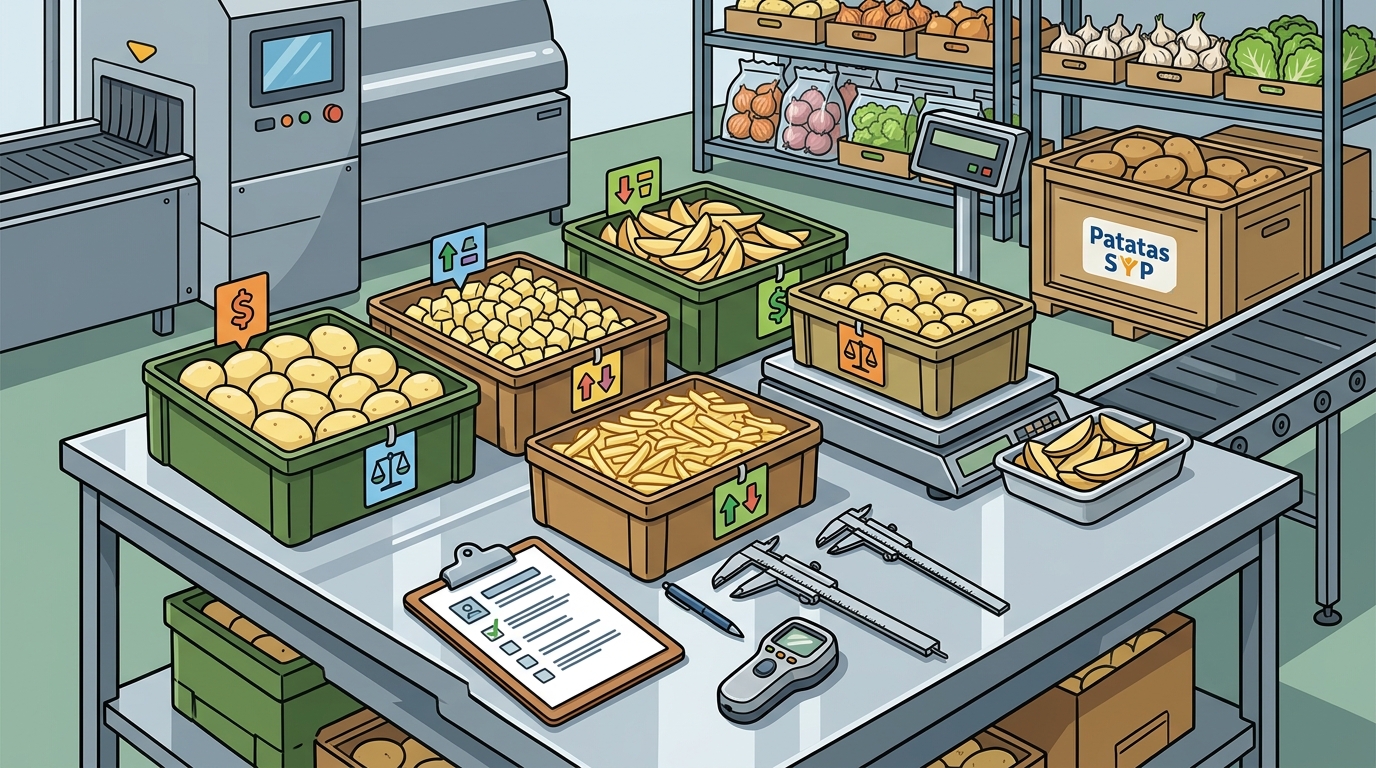
IV range is a standardized industry classification for washed, peeled, and cut fresh produce that requires minimal kitchen preparation. Procurement managers must match specific cut dimensions to their menu requirements before comparing unit costs. A thick steak house cut commands a higher price per kilogram than a standard french fry due to increased raw material retention. You should request detailed dimension sheets from every vendor to ensure accurate cost-per-plate calculations. Matching the exact cut to your operational workflow eliminates waste and stabilizes your food cost percentage.
Many distributors offer multiple thickness options for the same potato variety. Brava cuts require a specific geometric precision that increases processing time. Tortilla cuts demand uniform thickness to guarantee even frying results. You can explore our complete catalog of available cuts to see how dimensional variations affect pricing. Standardizing your order to one or two cut types often unlocks volume discounts. Requesting a free sample allows your kitchen team to verify frying behavior before signing a contract.
Evaluating Yield Rates
Yield rate is the precise percentage of usable product remaining after peeling, trimming, and cutting raw potatoes. A supplier claiming a lower base price may actually deliver a higher cost per plate if their yield rate falls below eighty percent. You must calculate the final cost per kilogram of ready-to-cook product rather than focusing solely on the raw purchase price. High-quality processing equipment preserves more edible mass and reduces disposal expenses. Requesting a yield report from each vendor reveals the true financial impact of your procurement decision. (Patatas Peladas 8211 Expertos)
Our processing facility utilizes advanced automated peeling technology to maximize edible output. We conduct monthly independent laboratory analyses to verify sanitary compliance and product consistency. You can review our quality control protocols to understand how we maintain high yield standards. Focusing exclusively on the lowest invoice total often leads to unexpected kitchen losses. Prioritizing yield stability protects your profit margins during peak service hours. (Cat logo 8211 Patatas)
Analyzing Delivery Logistics
Minimum order quantity is the absolute lowest weight threshold required to trigger a scheduled delivery route. Suppliers operating from centralized distribution hubs typically enforce stricter minimums to maintain route efficiency. You should map your weekly consumption against each vendor's delivery schedule to avoid stockouts or excessive storage costs. Frequent small deliveries often carry premium freight surcharges that erase initial price advantages. Consolidating your orders into larger, less frequent shipments usually reduces your overall logistics expenditure.
Our distribution network operates directly from Valdemoro to serve Madrid and surrounding commercial zones. We coordinate daily delivery windows to guarantee product freshness and minimize kitchen storage requirements. You can contact our commercial team to discuss customized delivery schedules that match your operational rhythm. Transparent freight policies prevent hidden charges from inflating your monthly vegetable budget. Aligning your order volume with our delivery capacity ensures consistent pricing and reliable service.
Comparing Sanitary Certification
Sanitary certification is a mandatory regulatory framework that verifies food safety compliance throughout the entire processing chain. Suppliers without documented quality management systems pose significant liability risks to commercial kitchens. You must verify that each vendor maintains active registration with relevant food safety authorities. Certifications require regular audits, traceability documentation, and strict environmental controls. Choosing a certified partner reduces your compliance burden and protects your establishment from regulatory penalties.
We maintain a dedicated quality management program that exceeds standard legal requirements. Our independent laboratory conducts monthly testing to verify sanitary compliance and processing hygiene. You can review our official contact information to request detailed certification documentation. Prioritizing verified safety protocols prevents costly operational disruptions and protects your brand reputation. Transparent quality reporting builds long-term trust between suppliers and commercial kitchens.
Reviewing Supplier Tiers
Supplier tier classification determines your access to pricing brackets, priority routing, and dedicated account support. Enterprise contracts typically require higher annual volumes but unlock substantial per-unit discounts. You should evaluate your projected annual consumption to determine which pricing tier aligns with your business model. Flexible contracts allow seasonal adjustments without penalty, which benefits establishments with fluctuating customer traffic. Negotiating clear escalation clauses protects your margins during raw material market volatility.
We offer structured procurement packages designed to support independent restaurants and large-scale catering operations. Our commercial division provides personalized pricing models that adapt to your specific volume requirements. You can visit our services page to learn how we structure flexible procurement agreements. Transparent contract terms prevent unexpected price adjustments and ensure predictable monthly expenditures. Partnering with a supplier that prioritizes long-term relationships reduces administrative friction and improves operational efficiency.
Key Takeaways
- IV range products now represent nearly thirty percent of commercial vegetable budgets according to recent industry reports.
- Yield rates directly impact final plate costs, making high-quality processing equipment essential for margin protection.
- Minimum order quantities vary by distribution hub, requiring careful route alignment to avoid freight surcharges.
- Sanitary certification mandates monthly independent testing to verify processing hygiene and regulatory compliance.
- Our Valdemoro facility has served commercial kitchens for over twenty years with daily delivery schedules.
- Flexible procurement contracts allow seasonal volume adjustments without triggering penalty clauses.
- Requesting detailed yield reports and dimension sheets prevents hidden cost inflation during peak service.
Frequently Asked Questions
How do I calculate the true cost per plate for pre-peeled potatoes?
You must divide the total purchase price by the verified yield percentage to determine the actual cost of usable product. This calculation reveals whether a lower invoice total actually saves money during service.
What documentation do I need to verify supplier sanitary compliance?
You should request active registration certificates, monthly independent laboratory reports, and traceability logs from every prospective vendor. These documents prove adherence to regional food safety regulations.
Can I adjust my order volume without penalty during slow seasons?
Flexible procurement contracts allow seasonal adjustments without triggering penalty clauses. You should review your agreement terms to confirm volume flexibility before committing to annual schedules.
How frequently do distributors deliver fresh IV range products?
Most established suppliers operate daily delivery routes to guarantee product freshness and minimize kitchen storage requirements. You can contact our commercial team to schedule deliveries that match your operational rhythm.
What cut specifications command the highest wholesale prices?
Specialized geometric cuts like brava or steak house varieties require additional processing time and higher raw material retention. You can explore our complete catalog to see how dimensional variations affect pricing.
Do suppliers provide free samples before contract signing?
Reputable distributors offer complimentary samples to verify frying behavior and kitchen compatibility. You can request a free sample of any product to evaluate quality before committing to bulk orders.
How do I compare freight surcharges across different vendors?
You should map your weekly consumption against each vendor's delivery schedule to avoid stockouts or excessive storage costs. Transparent freight policies prevent hidden charges from inflating your monthly vegetable budget.
Final Procurement Strategy
Comparing wholesale prices for pre-peeled potatoes requires a systematic evaluation of cut specifications, yield rates, delivery logistics, and sanitary certification. You should request detailed documentation from every prospective vendor and calculate your true cost per plate before signing any agreements. Our team has spent over twenty years optimizing processing workflows to deliver consistent quality and reliable service. You can visit our main page to explore our complete product range and request a customized quote. Contact our commercial division today to schedule a consultation and secure your preferred delivery schedule.