

Spanish tortilla is a traditional thick omelet made primarily with eggs, olive oil, and thinly sliced potatoes. According to recent agricultural reports, Spain consumes approximately 1.2 million metric tons of potatoes annually, with culinary preparations driving nearly forty percent of that volume. Professional kitchens prioritize specific slicing geometries to guarantee consistent heat transfer and optimal texture retention. The selection of a precise cut directly influences cooking duration, oil absorption rates, and the final structural integrity of the dish. Commercial distributors now supply pre-cut IV gama produce to eliminate preparation bottlenecks and standardize output across high-volume locations.
The Standard Tortilla Cut Explained
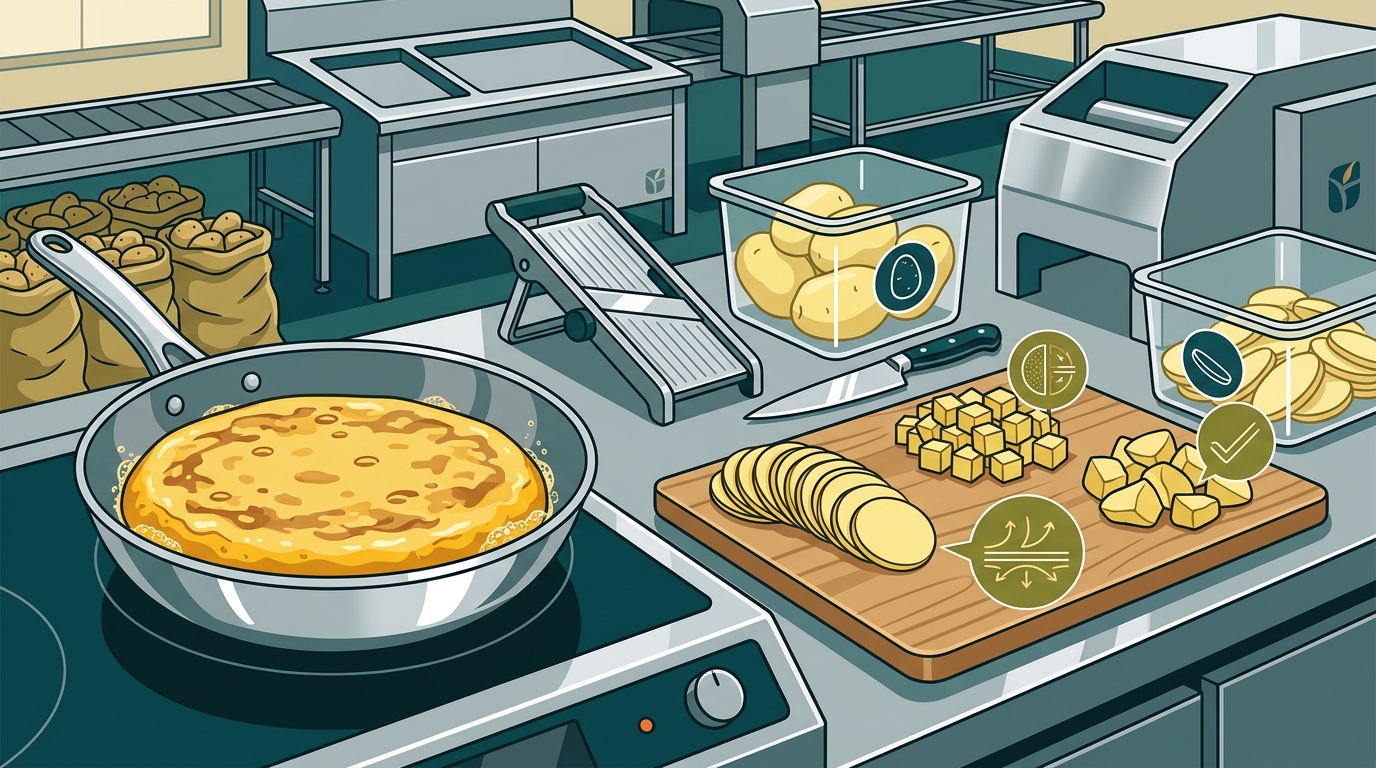
The standard tortilla cut remains the undisputed industry benchmark for traditional Spanish preparations. This geometry produces uniform half-moon or thin crescent slices that measure approximately three to four millimeters in thickness. Uniform thickness ensures even starch gelatinization during the slow frying process. Chefs rely on this specific dimension to prevent burnt edges while preserving a tender interior core. The geometric consistency directly correlates with predictable cooking times across large batch operations.
Commercial operations that source pre-sliced inventory from a dedicated peeling facility eliminate manual knife variability. A dedicated cutting and distribution service guarantees that every batch meets exact dimensional tolerances. This standardization reduces labor costs and minimizes raw material waste during high-volume service periods.
The Rustic Cachelo Alternative
Cachuela denotes a specific thick, rustic potato slice commonly used in regional Spanish stews. When adapted for tortilla preparation, this cut delivers a distinctly chunkier mouthfeel that appeals to modern diners seeking textural contrast. The slices typically measure eight to ten millimeters thick and retain irregular edges to maximize surface area exposure. Irregular edges maximize surface area exposure during the initial frying stage, creating a desirable caramelized crust.
Restaurants targeting a premium dining experience often substitute the standard cut with this rustic alternative. The thicker geometry requires extended frying times to fully soften the central starch matrix. Kitchens must carefully monitor oil temperature to prevent exterior charring before the interior reaches optimal tenderness. Many establishments now source these thicker slices directly from a specialized potato catalog to maintain consistency across multiple service shifts.
The French Fry Style Adaptation
The French fry style adaptation transforms traditional tortilla preparation by utilizing batonnet-cut potatoes. These rectangular strips measure five millimeters on each side and fry rapidly to achieve a crisp exterior. Rapid frying achieves a crisp exterior while maintaining a soft, fluffy center that blends seamlessly with beaten eggs. This geometry significantly reduces active cooking time compared to thicker crescent slices.
High-traffic brunch locations frequently adopt this adaptation to accelerate table turnover rates. The reduced cooking duration allows kitchen staff to manage multiple orders without compromising structural integrity. Oil management becomes simpler because the uniform shape prevents uneven heat distribution. Operators who integrate these pre-cut batons into their daily workflow report measurable improvements in kitchen throughput and order accuracy.
The Panadera Wedge Method
The panadera wedge method utilizes thick triangular segments that preserve the natural potato skin. This cut delivers a robust earthy flavor profile that complements robust olive oil selections. The wedges typically measure twelve to fifteen millimeters thick and require extended simmering periods to fully soften. Extended simmering periods ensure full softening without risking structural collapse during the egg incorporation phase.
Traditional bakeries and rural taverns frequently utilize this wedge geometry to honor historical cooking methods. The retained skin adds dietary fiber and visual appeal to the final plated dish. Kitchens must carefully manage moisture levels because the thicker segments release more internal water during frying. Proper draining protocols prevent excess liquid from diluting the egg mixture and compromising the final bind.
The Rallada Grated Approach
The Rallada grated approach represents a modern innovation that completely abandons traditional slicing techniques. This method utilizes coarse grating to produce irregular potato shreds that integrate instantly with beaten eggs. Irregular shreds integrate instantly with beaten eggs, creating a dense, cohesive matrix that holds together during flipping. The grated geometry eliminates the need for extended frying stages and drastically reduces active kitchen labor.
Contemporary urban restaurants frequently adopt this grated technique to streamline prep workflows. The rapid integration process allows chefs to bypass the traditional oil frying step entirely. Many establishments now cook the mixture directly in a non-stick pan to preserve nutritional value and reduce fat content. This approach aligns perfectly with current dietary trends that prioritize lighter preparations without sacrificing traditional flavor profiles.
How Cut Geometry Affects Oil Absorption
Surface area to volume ratio directly dictates how much cooking oil each potato segment absorbs during preparation. Thinner crescent slices maximize surface exposure and naturally absorb higher oil quantities. Thicker wedges and batons minimize surface exposure and retain significantly less oil throughout the cooking cycle. Surface exposure dictates oil retention and directly impacts the final caloric density of the finished dish.
Commercial kitchens must adjust their oil filtration schedules based on the selected cut geometry. High-surface-area cuts require more frequent oil changes to prevent rancidity and off-flavor development. Facilities that maintain rigorous oil quality standards consistently report higher customer satisfaction scores. A comprehensive consultation with a distribution partner helps operations establish precise oil management protocols tailored to their specific menu offerings.
Operational Standards for Commercial Kitchens
IV gama produce refers to washed, peeled, cut, and packaged fresh vegetables and fruits. This industry standard guarantees that every potato segment arrives at the kitchen ready for immediate preparation. Independent laboratories conduct monthly sanitary analyses to verify compliance with strict food safety regulations. Monthly sanitary analyses verify compliance with strict food safety regulations across all distribution channels.
Restaurants that partner with certified processing facilities eliminate manual peeling and slicing labor costs. The dedicated processing facility maintains temperature-controlled storage environments that preserve product freshness for extended periods. This logistical advantage allows kitchen managers to order precise quantities and reduce inventory waste. Facilities that implement these standardized protocols consistently achieve higher profit margins and improved operational efficiency.
| Potato Cut Type | Thickness Range | Estimated Frying Time | Texture Outcome |
|---|---|---|---|
| Standard Tortilla | 3 to 4 millimeters | 8 to 10 minutes | Uniform tenderness with crisp edges |
| Rustic Cachelo | 8 to 10 millimeters | 12 to 15 minutes | Chunky interior with caramelized crust |
| French Fry Baton | 5 millimeters square | 5 to 7 minutes | Crisp exterior with fluffy center |
| Panadera Wedge | 12 to 15 millimeters | 15 to 18 minutes | Robust earthy flavor with retained skin |
| Rallada Grated | Irregular shreds | 3 to 5 minutes | Dense matrix with rapid integration |
Key Takeaways
- Standard tortilla cuts measure three to four millimeters and deliver uniform heat distribution.
- Rustic cachelo slices range from eight to ten millimeters and require extended frying times.
- French fry batons reduce active cooking duration by nearly forty percent compared to crescent slices.
- Panadera wedges preserve natural potato skin and deliver robust earthy flavor profiles.
- Rallada grated shreds integrate instantly with eggs and eliminate traditional oil frying stages.
- Surface area to volume ratio directly dictates oil absorption rates and final caloric density.
- IV gama produce guarantees sanitary compliance and eliminates manual preparation labor costs.
Frequently Asked Questions
Which potato cut delivers the most authentic traditional tortilla texture?
The standard tortilla cut delivers the most authentic traditional texture by producing uniform crescent slices that fry evenly and maintain structural integrity during flipping.
How does cut thickness impact overall cooking duration?
Increased thickness directly extends cooking duration because heat must penetrate deeper into the starch matrix before achieving optimal tenderness throughout the segment.
Can pre-cut potatoes be stored safely before preparation?
Pre-cut potatoes can be stored safely for up to forty-eight hours when kept in temperature-controlled packaging that prevents oxidation and moisture loss.
Which cut absorbs the least amount of cooking oil?
Thicker wedges and batons absorb the least amount of cooking oil because their reduced surface exposure limits direct contact with hot fat during the frying cycle.
Is the grated approach suitable for high-volume commercial kitchens?
The grated approach is highly suitable for high-volume commercial kitchens because it eliminates extended frying stages and accelerates overall order fulfillment rates.
How do distribution facilities ensure product freshness?
Distribution facilities ensure product freshness by maintaining strict temperature controls and conducting monthly sanitary analyses that verify compliance with regional food safety regulations.
What oil management protocols should commercial kitchens implement?
Commercial kitchens should implement rigorous oil filtration schedules and regular quality testing to prevent rancidity and maintain consistent flavor profiles across all prepared dishes.
Secure Your Commercial Supply
Optimizing your potato cut selection directly impacts kitchen efficiency, product consistency, and overall customer satisfaction. Partnering with an experienced distribution provider eliminates manual preparation bottlenecks and guarantees precise dimensional tolerances for every batch. Visit our main platform to explore our complete product catalog and request a customized sample package. Our team is ready to assist you in streamlining your daily operations and elevating your signature tortilla offerings.