
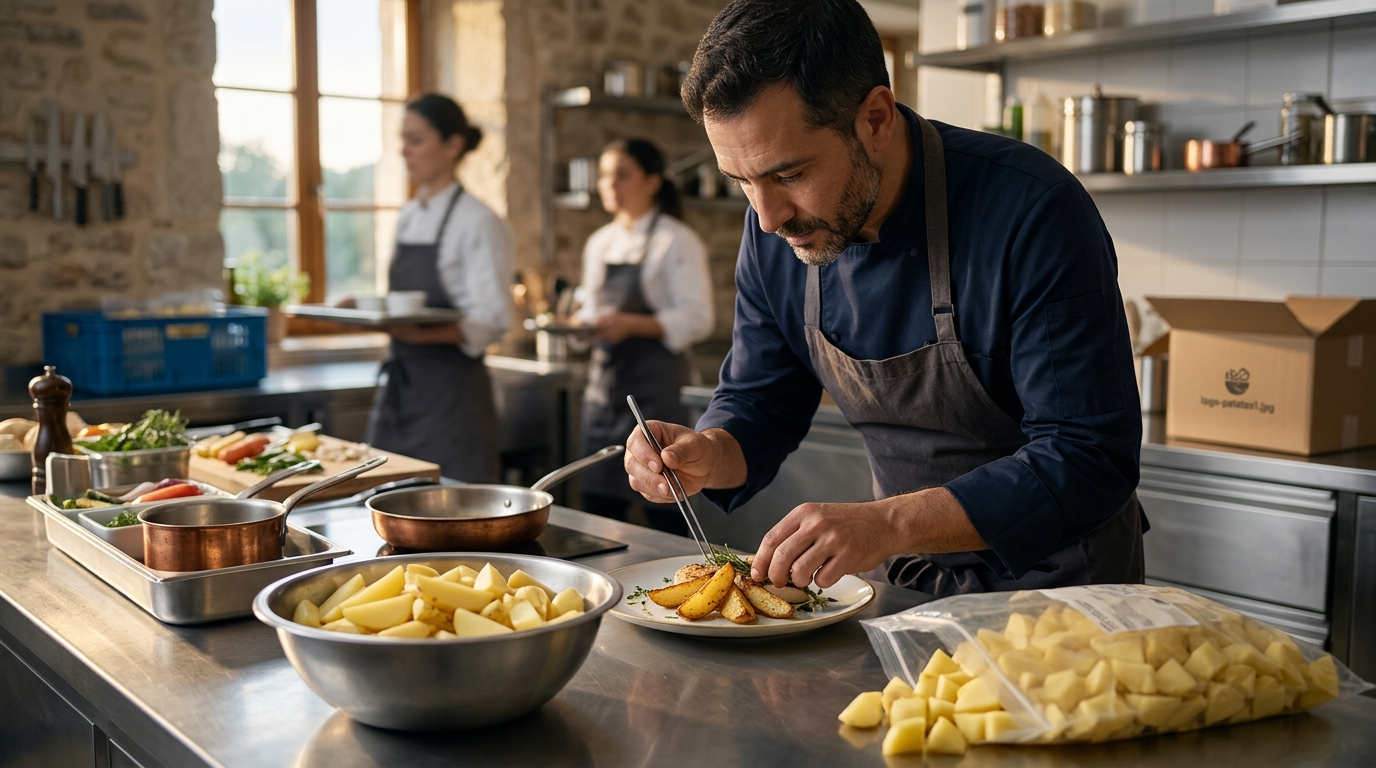
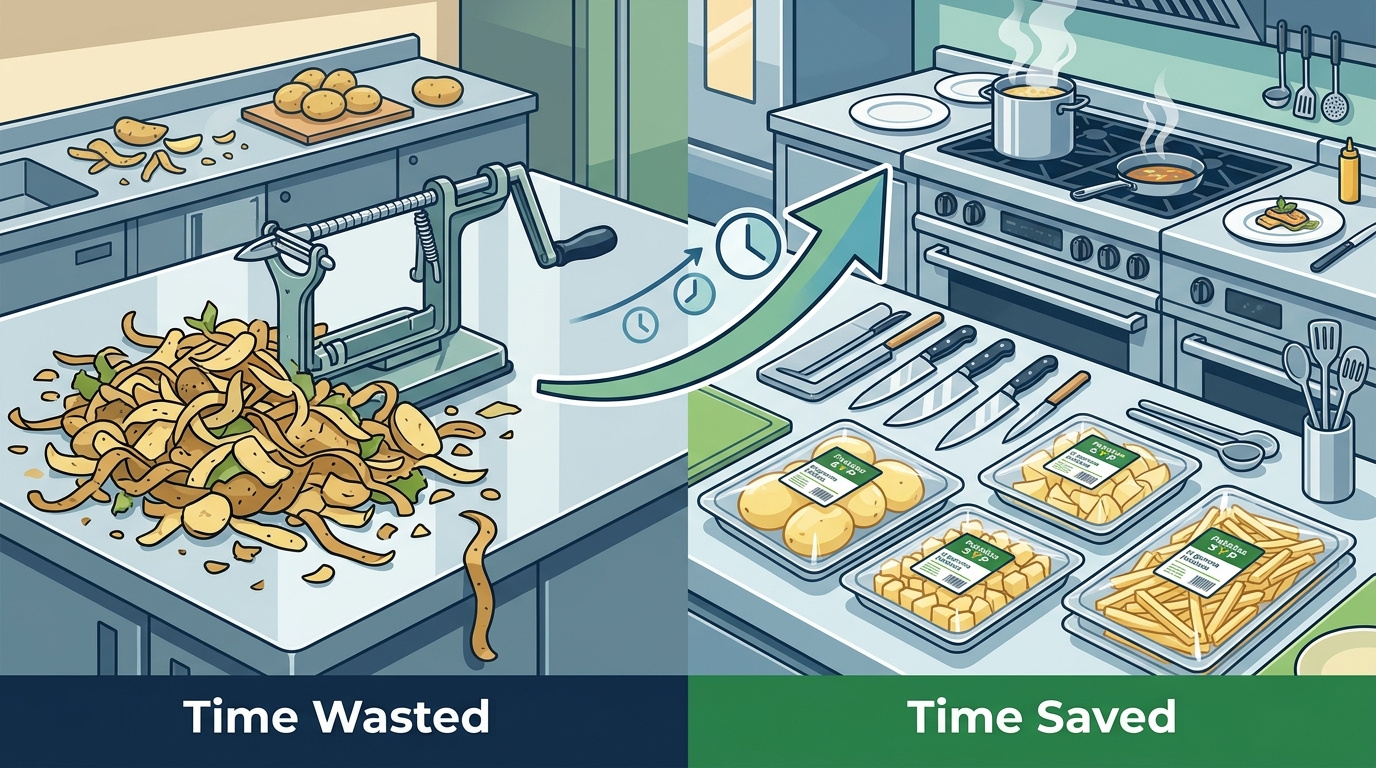
Commercial kitchens currently waste approximately 18 percent of their prep hours on manual vegetable processing, according to industry efficiency reports. This operational bottleneck directly impacts ticket times and labor costs. Restaurants that transition to professional IV gamma distribution eliminate manual peeling and cutting entirely. By outsourcing raw material preparation to specialized facilities, culinary teams redirect staff toward plating and guest service. This strategic shift reduces kitchen congestion while maintaining consistent product quality across every service period. Modern food service models prioritize speed without compromising nutritional value or flavor profiles.
The Hidden Cost of Manual Prep Work
Manual vegetable processing requires significant labor hours that directly reduce profit margins. Kitchen staff spend hours scrubbing, peeling, and trimming raw ingredients before cooking begins. This repetitive task increases employee turnover and training expenses. Operational efficiency drops significantly when prep stations become overcrowded during peak service hours. Restaurants that outsource these tasks experience immediate improvements in staff retention and kitchen workflow. Professional distribution centers handle raw material processing using automated machinery that maintains strict quality control. Culinary teams can focus on recipe development and guest interaction instead of repetitive manual labor.
Understanding IV Gamma Distribution Models
IV gamma distribution is a specialized food processing category that delivers fresh, peeled, and cut vegetables directly to commercial kitchens. This system eliminates the need for on-site peeling equipment and reduces water consumption during preparation. Restaurants benefit from consistent product availability while avoiding seasonal supply fluctuations. Supply chain reliability improves dramatically when vendors maintain dedicated processing facilities. Commercial establishments gain access to specialized cuts that require precise knife skills and specialized equipment. Professional processors maintain cold chain integrity from harvesting to final delivery. This approach ensures that every batch meets exact culinary specifications.
Core Processing Methodologies
Automated processing is a specialized kitchen workflow that utilizes machinery to remove skin and trim vegetables at precise dimensions. Cutting machinery operates at precise speeds to maintain uniform dimensions across every batch. Quality control protocols monitor moisture levels and surface texture to prevent premature oxidation. Restaurants receive products that require minimal additional preparation before cooking. This standardization reduces cooking times and ensures consistent portion control across all service periods.
Standardized Cuts for Consistent Cooking Results
Uniform potato dimensions directly impact cooking consistency and final plate presentation. Professional processors offer multiple cut specifications including french fries, brava cuts, and steak house portions. Each specification maintains exact thickness measurements that guarantee even heat distribution during frying or roasting. Consistent portion sizing reduces food waste and simplifies inventory tracking for kitchen managers. Restaurants can order specific cuts that match their menu requirements without maintaining specialized cutting equipment. This flexibility allows culinary teams to adapt quickly to seasonal menu changes or promotional campaigns.
Menu Integration Strategies
Chefs integrate pre-cut vegetables into high-volume dishes to maintain speed during rush periods. Pre-portioned ingredients simplify recipe scaling and reduce calculation errors during busy service. Kitchen staff spend less time measuring and more time executing cooking techniques. This operational shift directly improves ticket times and guest satisfaction scores. Restaurants that adopt standardized cuts report higher table turnover rates and improved profit margins.
Sanitary Compliance and Supply Chain Safety
Food safety regulations require strict adherence to handling protocols and temperature controls. Professional processing facilities maintain independent laboratory testing to verify product safety and compliance. Restaurants receive documentation proving that every batch meets current health department standards. Regulatory compliance becomes simplified when vendors assume responsibility for sanitary certification and quality audits. Commercial kitchens avoid the financial burden of maintaining in-house testing equipment and hiring specialized food safety officers. Distribution partners implement rigorous cleaning schedules and pest control measures to prevent contamination. This proactive approach protects restaurant reputations and ensures guest safety.
Quality Assurance Protocols
Independent laboratories conduct monthly analysis to verify processing hygiene and product longevity. Restaurants benefit from documented quality assurance records that simplify health inspections. Distribution networks maintain temperature-controlled logistics to prevent bacterial growth during transit. Kitchen managers receive detailed delivery schedules that align with daily production requirements. This systematic approach eliminates guesswork and ensures consistent product availability.
Scaling Production Without Expanding Floor Space
Restaurant expansion often requires additional square footage for prep stations and storage areas. Outsourcing vegetable processing eliminates the need for specialized equipment and dedicated workspace. Commercial kitchens maintain smaller footprints while handling higher order volumes. Real estate optimization increases profitability by converting prep areas into additional dining capacity. Restaurants can redirect capital expenditures toward marketing, technology upgrades, or staff development instead of industrial processing machinery. This financial flexibility supports sustainable growth and long-term business viability. Professional distributors handle seasonal demand spikes without requiring restaurant staff to hire temporary workers.
Financial Impact Analysis
Capital expenditure savings directly improve cash flow and reinvestment potential. Restaurants avoid maintenance costs, equipment repairs, and utility expenses associated with industrial processing machinery. Operational budgets shift from fixed capital investments to variable distribution costs. This financial model provides greater flexibility during economic fluctuations. Business owners maintain control over pricing strategies while benefiting from professional processing expertise.
Key Takeaways
- Commercial kitchens waste approximately 18 percent of prep hours on manual processing.
- IV gamma distribution delivers fresh, peeled, and cut vegetables directly to commercial locations.
- Automated processing maintains uniform dimensions that guarantee even heat distribution.
- Independent laboratories conduct monthly analysis to verify processing hygiene and product longevity.
- Professional facilities maintain cold chain integrity from harvesting to final delivery.
- Restaurants report higher table turnover rates and improved profit margins.
- Capital expenditure savings directly improve cash flow and reinvestment potential.
Frequently Asked Questions
What is IV gamma distribution?
IV gamma distribution is a specialized food processing category that delivers fresh, peeled, and cut vegetables directly to commercial kitchens.
How does automated processing affect cooking times?
Uniform potato dimensions directly impact cooking consistency and final plate presentation. Professional processors offer multiple cut specifications including french fries, brava cuts, and steak house portions. Each specification maintains exact thickness measurements that guarantee even heat distribution during frying or roasting.
What sanitary certifications do professional processors maintain?
Food safety regulations require strict adherence to handling protocols and temperature controls. Professional processing facilities maintain independent laboratory testing to verify product safety and compliance.
Can restaurants customize cut specifications?
Restaurants can order specific cuts that match their menu requirements without maintaining specialized cutting equipment. This flexibility allows culinary teams to adapt quickly to seasonal menu changes or promotional campaigns.
How do distribution networks handle seasonal demand?
Professional distributors handle seasonal demand spikes without requiring restaurant staff to hire temporary workers. Distribution partners implement rigorous cleaning schedules and pest control measures to prevent contamination.
What financial benefits accompany outsourced processing?
Capital expenditure savings directly improve cash flow and reinvestment potential. Restaurants avoid maintenance costs, equipment repairs, and utility expenses associated with industrial processing machinery.
How does outsourcing impact kitchen staff retention?
Manual vegetable processing requires significant labor hours that directly reduce profit margins. Kitchen staff spend hours scrubbing, peeling, and trimming raw ingredients before cooking begins. This repetitive task increases employee turnover and training expenses.
What delivery schedules do professional vendors provide?
Kitchen managers receive detailed delivery schedules that align with daily production requirements. This systematic approach eliminates guesswork and ensures consistent product availability.
Final Recommendations
Restaurants seeking operational efficiency should transition to professional IV gamma distribution immediately. Contact Patatas S&P to schedule a consultation and request a free product sample. Their Valdemoro processing facility delivers fresh cuts daily to commercial kitchens across Madrid. Visit patatassyp.es to explore their complete product catalog and request a custom quote. Professional distribution eliminates manual prep work while maintaining strict quality standards. Book your consultation today and transform your kitchen workflow.
| Processing Method | Operational Impact | Recommended Application |
|---|---|---|
| Manual Peeling and Cutting | High labor costs and inconsistent portions | Small-scale home kitchens |
| Automated IV Gamma Distribution | Reduced prep time and standardized cuts | Commercial restaurant operations |
| In-House Industrial Machinery | High capital expenditure and maintenance burdens | Large-scale food manufacturing plants |