

Commercial food service operations face significant margin pressure when sourcing fresh produce. Global potato demand continues to rise across restaurant sectors, yet inconsistent supply chains directly impact kitchen efficiency and customer satisfaction. Procurement managers must evaluate suppliers through a strict operational lens. This guide outlines the exact criteria required to secure a reliable IV gama potato distributor that aligns with modern commercial kitchen standards.
Verify Sanitary Certification and Quality Control
Food safety compliance represents the absolute baseline for any commercial food procurement decision. IV gama processing involves raw agricultural products that require strict environmental controls. A qualified supplier must maintain an independent laboratory that conducts monthly sanitary analyses. This independent verification ensures that every batch meets regulatory thresholds before reaching your kitchen. Food safety protocols dictate that cross-contamination risks must be eliminated through documented handling procedures. You should request current certification documents before signing any contract. Suppliers lacking transparent quality control programs introduce unnecessary liability to your operation.
Independent Lab Testing
Third-party laboratory audits provide objective data regarding bacterial counts and chemical residues. These reports verify that your supplier adheres to strict hygiene standards during peeling and cutting phases. You should verify that testing occurs monthly rather than annually. Regular audits guarantee consistent product safety across all seasonal harvest cycles.
Traceability Standards
Complete batch tracking allows you to isolate specific deliveries during routine health inspections. Every container should display harvest dates, processing timestamps, and storage temperatures. This documentation proves regulatory compliance during unexpected audits. Suppliers that maintain full traceability records demonstrate institutional maturity and operational discipline.
Assess Processing Capabilities and Cut Variety
Commercial kitchens require precise potato specifications to maintain menu consistency. IV gama potato distributor services must offer multiple cutting configurations to support diverse menu formats. You should verify that the supplier maintains an automated peeling and cutting facility. Manual processing introduces inconsistent sizing and increases labor costs. Automated machinery guarantees uniform dimensions across every delivery. Agricultural processing standards require automated equipment to maintain precise temperature controls during high-volume production.
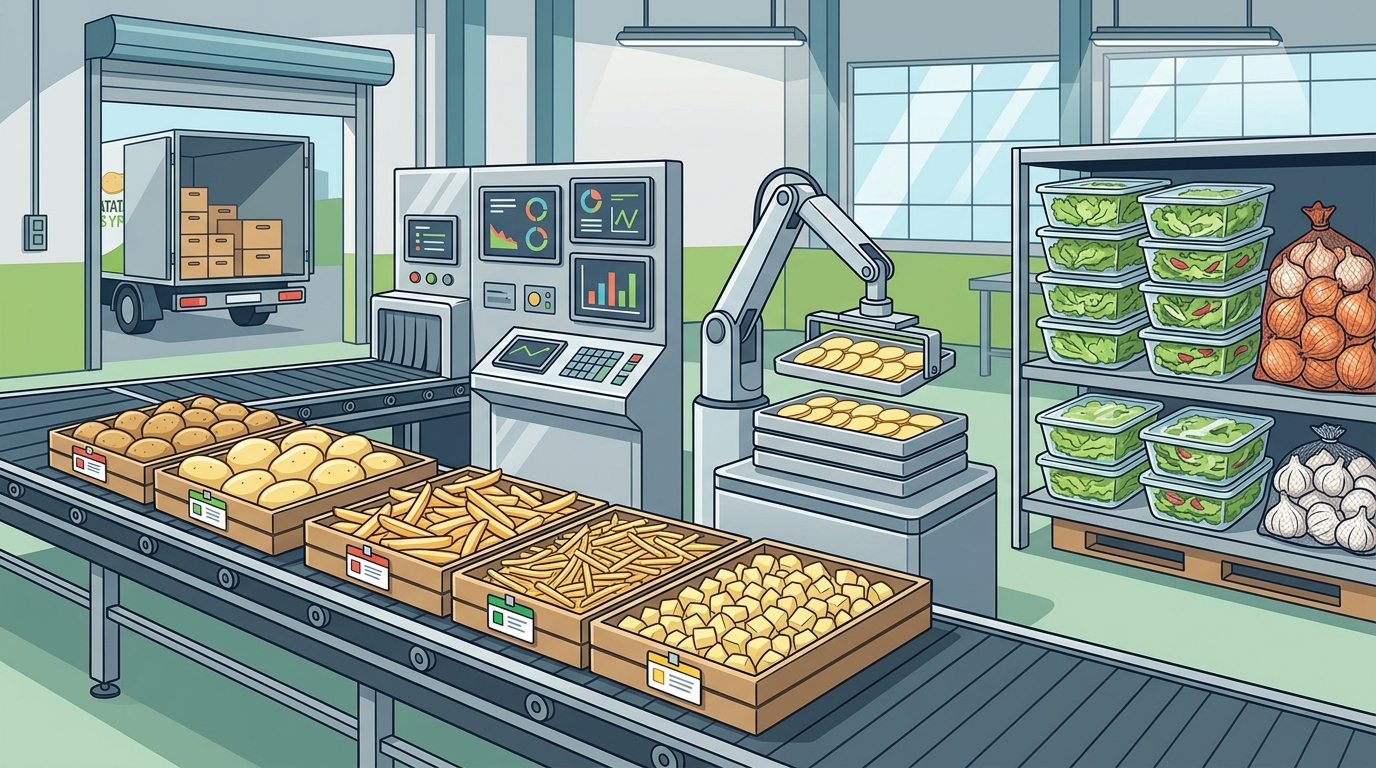
IV Gama Processing
IV gama processing refers to fresh vegetables that undergo peeling, cutting, and packaging while maintaining raw biological activity. This classification ensures maximum nutritional retention and extended shelf life without thermal treatment. You should confirm that your supplier utilizes cold-chain packaging to preserve enzymatic stability. Proper IV gama handling prevents premature oxidation and maintains optimal texture for frying or sautéing.
Custom Cut Specifications
Menu development often requires non-standard dimensions that generic distributors cannot fulfill. You should request a comprehensive catalog detailing available thicknesses and shapes. French cuts, brava slices, steak house rounds, and panadera strips must all be available upon request. Suppliers offering custom cutting parameters reduce your inventory waste and streamline kitchen prep workflows.
Evaluate Logistics and Delivery Frequency
Supply chain reliability directly impacts kitchen scheduling and customer wait times. You must verify that your supplier operates within a tight regional distribution radius. Same-day freshness guarantees eliminate the need for excessive on-site storage. You should confirm that deliveries occur daily during early morning hours. This schedule aligns with standard restaurant prep windows and prevents midday operational disruptions. Cold chain logistics require continuous temperature monitoring to prevent bacterial proliferation during transit.
Same-Day Freshness
Delivering raw agricultural products within twenty-four hours of processing preserves optimal moisture content and structural integrity. You should prioritize suppliers that guarantee same-day delivery windows. This practice eliminates the quality degradation associated with multi-day warehouse storage. Freshness guarantees directly translate to superior frying results and consistent plating standards.
Regional Distribution Networks
Geographic proximity determines delivery speed and fuel surcharge costs. You should verify that the supplier maintains a dedicated fleet serving your specific municipality. Regional networks reduce transit times and minimize temperature fluctuations during transport. Proximity also enables emergency order fulfillment when unexpected customer volumes occur.
Review Pricing Models and Order Flexibility
Commercial procurement requires transparent pricing structures that scale with your operational volume. You should request a detailed pricing matrix that correlates order quantities with unit costs. Tiered pricing models reward consistent purchasing behavior while protecting margins during slower seasons. You must verify whether delivery fees are bundled into the base price or charged separately. Hidden logistics fees frequently erage projected profitability across high-volume restaurant operations.
Tiered Pricing Structures
Volume-based pricing tiers incentivize long-term partnerships while stabilizing your monthly food costs. You should negotiate contracts that lock in pricing for twelve-month periods. This approach shields your operation from seasonal harvest fluctuations and market volatility. Predictable pricing enables accurate menu costing and maintains consistent profit margins.
Minimum Order Requirements
Suppliers establish minimum order thresholds to optimize route efficiency and vehicle capacity. You should verify whether these thresholds align with your weekly consumption patterns. Flexible minimum requirements accommodate seasonal menu changes and temporary staffing reductions. Rigid order mandates force restaurants to overstock perishable items and increase spoilage rates.
Confirm Operational Longevity and Industry Reputation
Established suppliers demonstrate institutional resilience and financial stability. You should verify that the company maintains continuous operations for at least two decades. Longevity indicates successful adaptation to regulatory changes, agricultural cycles, and market demands. You should request client references from comparable restaurant formats. Peer testimonials reveal actual delivery reliability and customer service responsiveness. Market stability metrics consistently show that established distributors maintain superior inventory management systems.
Decade-Long Market Presence
Companies operating beyond twenty years possess refined logistical networks and established agricultural partnerships. You should verify that the supplier maintains continuous service across multiple economic cycles. Longevity directly correlates with supply chain resilience and emergency response capabilities. Established operators absorb market shocks without compromising delivery schedules.
Client Portfolio Verification
Reference checks reveal actual performance metrics rather than marketing claims. You should request contact information for three active restaurant clients within your region. Direct conversations uncover delivery consistency, complaint resolution speed, and billing accuracy. Verified client portfolios confirm that the supplier meets commercial kitchen expectations.
Supplier Evaluation Matrix
| Operational Criterion | Minimum Acceptable Standard | Commercial Impact |
|---|---|---|
| Sanitary Certification | Independent monthly laboratory audits | Eliminates regulatory liability and ensures consistent food safety compliance |
| Processing Facility | Automated peeling and cutting plant | Guarantees uniform dimensions and reduces manual kitchen labor costs |
| Delivery Schedule | Daily early morning windows | Aligns with prep cycles and prevents midday operational disruptions |
| Pricing Structure | Transparent tiered volume discounts | Stabilizes monthly food costs and protects profit margins |
| Operational History | Minimum twenty years continuous service | Confirms supply chain resilience and emergency response capabilities |
Key Takeaways
- IV gama processing refers to fresh vegetables that undergo peeling, cutting, and packaging while maintaining raw biological activity.
- Independent laboratory audits must occur monthly to verify bacterial counts and chemical residues across all production batches.
- Automated peeling and cutting facilities guarantee uniform dimensions and eliminate inconsistent manual preparation errors.
- Daily early morning delivery windows align perfectly with standard restaurant prep schedules and prevent midday service gaps.
- Companies operating beyond twenty years possess refined logistical networks and established agricultural partnerships.
- Transparent tiered pricing structures protect profit margins during seasonal harvest fluctuations and market volatility.
- Complete batch tracking allows you to isolate specific deliveries during routine health inspections and regulatory audits.
Frequently Asked Questions
What defines IV gama potato processing?
IV gama processing refers to fresh vegetables that undergo peeling, cutting, and packaging while maintaining raw biological activity. This classification ensures maximum nutritional retention and extended shelf life without thermal treatment. You should confirm that your supplier utilizes cold-chain packaging to preserve enzymatic stability.
How often should sanitary laboratory audits occur?
Independent laboratory audits must occur monthly to verify bacterial counts and chemical residues across all production batches. Regular audits guarantee consistent product safety across all seasonal harvest cycles. You should request current certification documents before signing any contract.
Do automated cutting facilities guarantee uniform dimensions?
Automated machinery guarantees uniform dimensions across every delivery while eliminating inconsistent manual preparation errors. You should verify that the supplier maintains an automated peeling and cutting facility. Manual processing introduces variable sizing and increases labor costs.
What delivery frequency aligns with restaurant prep cycles?
Daily early morning delivery windows align perfectly with standard restaurant prep schedules and prevent midday service gaps. You should confirm that deliveries occur daily during early morning hours. This schedule optimizes kitchen workflow and reduces on-site storage requirements.
How do tiered pricing structures protect restaurant margins?
Volume-based pricing tiers incentivize long-term partnerships while stabilizing your monthly food costs. You should negotiate contracts that lock in pricing for twelve-month periods. This approach shields your operation from seasonal harvest fluctuations and market volatility.
Why does operational longevity matter for commercial procurement?
Companies operating beyond twenty years possess refined logistical networks and established agricultural partnerships. You should verify that the supplier maintains continuous service across multiple economic cycles. Longevity directly correlates with supply chain resilience and emergency response capabilities.
Secure Your Next Delivery
Partnering with a certified IV gama potato distributor eliminates supply chain uncertainty and standardizes kitchen output. You should request a comprehensive product catalog and schedule a facility tour to verify processing capabilities. Contact our commercial team today to discuss your specific volume requirements and delivery schedule. Request your free sample and experience the operational advantages of a fully automated peeling and cutting plant. Visit our full product catalog to explore available cuts and pricing tiers. Explore our detailed service framework to understand our quality control protocols. Review our frequently asked questions to address common procurement concerns. Begin your partnership with a supplier that prioritizes sanitary certification and same-day freshness.